

REVIEW · KAMPALA WALKING TOURS
Free Female Guided Walking Tours Kampala (3 Hours)
Kampala feels personal with female guides. This guided walk in Kampala is led by local women, with a goal of sharing history and culture while supporting young female guides working in refugee communities. I love the way it keeps the focus on people and stories, and I love that you start at the easy-to-find Cariboo Restaurant meeting point.
You’ll also like that the route is flexible, since you can choose interests from a menu of stops, and the group stays small (up to 10 people). One consideration: the tour includes free guiding only, so entrance fees and any taxes are on you, including the Gaddafi Mosque entrance fee.
In This Review
- Key things I’d plan around before you go
- Free-feeling Kampala with a female-led mindset
- Meeting at Cariboo Restaurant and keeping your day simple
- How the 3-hour route really works (choose your stops)
- Independence Monument: where modern Kampala talks back
- Sir Edward Muteesa, Sir Apollo Kagwa, and leadership statues
- World War memorials and the CHOGM Stride monument
- Nakasero Market: Kampala energy you can feel in your feet
- Hindu Temple Nakasero: religion as architecture and community
- Optional fabric shops and Old Taxi Park: choose your flavor
- Gaddafi Mosque and paying for entry without surprises
- 1000 cups of coffee: a smart place to pause
- African village craft market: where you can shop with context
- Bahai Temple and the Bahai Faith: calm geometry at the end
- Price and value: what $30 gets you, and what it does not
- Who this walking tour suits best
- Should you book this Kampala walking tour?
- FAQ
- How long is the Free Female Guided Walking Tours Kampala?
- Where do I meet for the tour?
- What does the price include?
- Are entrance fees included for stops like the mosque?
- How big is the group?
- What if weather is poor?
Key things I’d plan around before you go

- Local female-led guidance: the walk is driven entirely by local women guides, with a strong community angle behind it.
- Pick-your-pacing route: you can select from a list of major Kampala landmarks and culture stops.
- Small group size: limited to a maximum of 10 people, so you actually get to ask questions.
- Monuments plus everyday life: big memorials sit right next to markets and temples.
- Guidance is included, site fees are not: plan extra cash for places that require entry.
Other Kampala walks, guide by guide
- Kampala’s Best Experience walking tour
★ 5.0 · 137 reviews - Kampala Walking City Tours (Women Guided)
★ 5.0 · 115 reviews - Kampala Walking Tour (3 Hours) with Optional Gaddafi Mosque Visit
★ 5.0 · 112 reviews - Kampala: City Guided walking sightseeing Tour
★ 4.7 · 52 reviews
Free-feeling Kampala with a female-led mindset
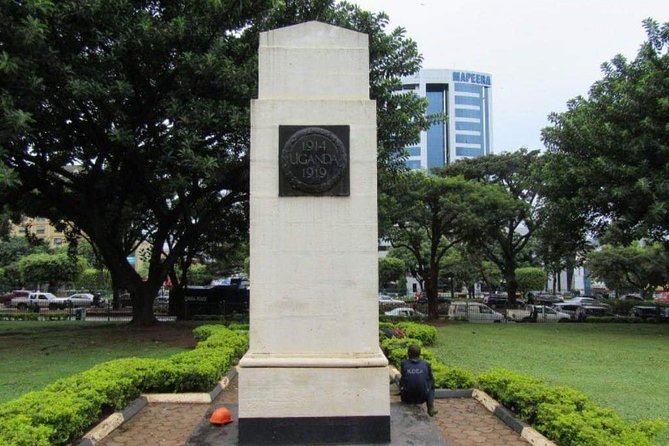
This is the kind of tour I like best when I want context fast. In three hours, you get a guided walk that connects Kampala landmarks with everyday places, so the city starts to make sense instead of just looking like a collection of busy streets.
What makes it especially meaningful is who is doing the walking and talking. The tour is solely conducted by local female guides, and the whole concept is designed to support young women who are passionate about history and culture, with a link to helping refugee communities. It’s not just a sightseeing route, it’s a chance to see the city through the eyes of people who live with it.
I also appreciate that you’re not locked into one rigid script. You can choose the activities you care about from the stop list. That means you can aim for the monuments if you want political and historical context, or you can lean more toward religious sites, markets, and crafts if you want cultural texture.
One practical thing to keep in mind right away: this is guidance only. If you’re expecting every attraction fee to be covered, adjust your expectations now. The tour keeps the costs predictable by separating guiding from site costs.
Meeting at Cariboo Restaurant and keeping your day simple
Your tour starts and ends back at the meeting point: Cariboo Restaurant on Speke Road (Cariboo Restaurant, 8H7J+HM3, Kampala, Uganda). For a walking tour, this matters. You don’t have to coordinate transport between multiple drop points, and you can get oriented quickly.
The meeting area also helps because the tour is described as near public transportation. That makes it easier to line up your schedule, whether you’re already in central Kampala or you’re hopping across town.
Once you book, you’ll receive confirmation, and you’ll use a mobile ticket. That’s helpful in cities where paper tickets can be a hassle. It also suggests you should keep an eye on your phone for your details.
Finally, the tour is listed as suitable for most people, and the group cap is small. For me, that combination usually means fewer awkward logistics and more conversation time.
How the 3-hour route really works (choose your stops)
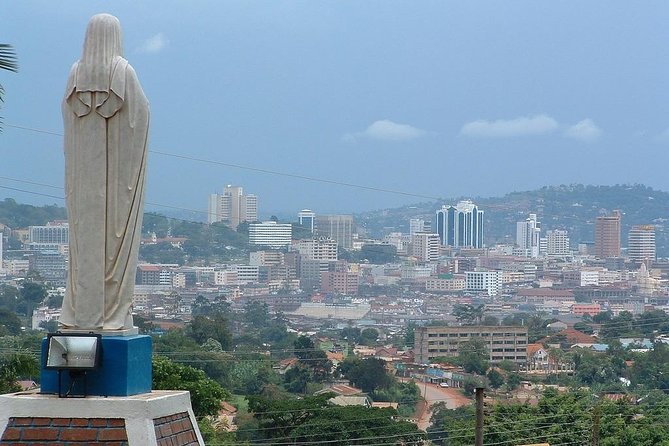
The duration is listed as about 3 hours. In that timeframe, you are moving through a cluster of Kampala landmarks, with a mix of monuments, memorials, markets, and places of worship.
Here’s the good news: you aren’t forced to hit everything. The tour offers a menu of potential stops, including:
- Independence monument
- Sir Edward Muteesa Monument
- World War 1 and 2 memorial monument
- The Stride monument (CHOGM 2007)
- Sculpture of Sir Apollo Kagwa
- Statue of leadership
- Nakasero market
- Hindu Temple Nakasero
- Fabric shops (optional)
- Old Taxi Park
- Gaddafi Mosque (entrance fee required)
- 1000 cups of coffee (highly recommended)
- African village craft market
- Bahai Temple (Bahai Faith)
That flexibility can be a real advantage. If you’re short on time, you can prioritize the landmarks and skip optional shopping stops. If you want a slower, more culture-focused walk, you can spend more time around market energy and crafts.
One thing to consider, though: because the walk is time-limited, you’ll want to arrive on time at Cariboo Restaurant. Even in small groups, starting late can shrink what you get to cover.
More Uganda walks at street level

Independence Monument: where modern Kampala talks back
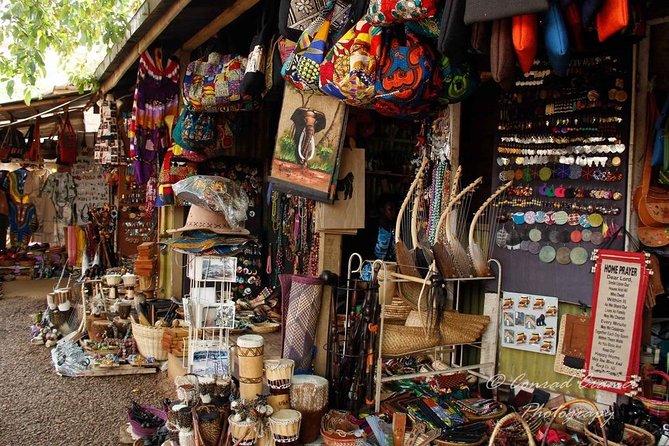
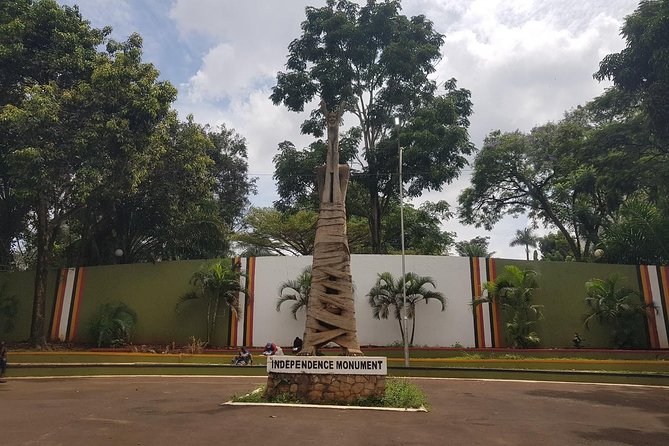
The Independence monument is one of those anchor stops. It signals the shift from colonial rule to self-determination, and it gives you a starting point for understanding why other nearby monuments and memorials exist.
Even if you don’t consider yourself a monuments person, this stop helps you calibrate. When you look at independence symbols first, the rest of the city landmarks start to feel less random. The walk becomes a guided timeline you can follow on foot.
Also, monuments are a good way to build orientation in a city you’ve never visited. You see a major landmark, you learn what it represents, then you connect it to the rest of Kampala as you move along.
Sir Edward Muteesa, Sir Apollo Kagwa, and leadership statues
A big part of this tour is about people and power. You can expect stops tied to named leaders and public symbols, including:
- Sir Edward Muteesa Monument
- Sculpture of Sir Apollo Kagwa
- Statue of leadership
These kinds of stops do more than look impressive. They tell you what Kampala chose to honor in stone and bronze, and they help you understand how leadership and identity get represented in public space.
I also like that this section pairs well with the rest of the itinerary. After you take in monuments about leadership, you then move toward markets and everyday religious spaces. The city stops being abstract. It turns into a lived place, not just a historical setting.
If you’re the type who enjoys asking questions, this is a perfect time to do it. Guides can usually explain the symbolism behind the figures and why these names matter locally, and with a small group you’ll get more direct answers.
World War memorials and the CHOGM Stride monument
The tour includes two heavy memorial stops that add real weight to the route:
- World War 1 and 2 memorial monument
- The Stride monument (CHOGM 2007)
The World War memorial monument connects Kampala to global events. Even if you don’t know the details, it gives you a reference point for how worldwide history touched local space.
Then you shift to the Stride monument, tied to CHOGM 2007. That jump from world conflict to a modern international event helps you see Kampala as both historically connected and forward-looking.
What I appreciate here is balance. You get solemn memorial context, then you get a contemporary symbol you can compare to the older pieces. It’s a tour that doesn’t only look backward.
Nakasero Market: Kampala energy you can feel in your feet
The itinerary includes Nakasero market, which is where Kampala stops being about statues and starts becoming about daily life.
Markets are where you learn how people buy, sell, and communicate. Even without focusing on shopping, you’ll pick up the rhythm of the area. And with a guide, you can understand what you’re seeing rather than just watching passersby.
In practical terms, this stop also helps your pacing. Markets create natural pauses, and you can decide how long to stay.
If you like food, clothing, or just the texture of local commerce, this is a great midpoint in a walking tour. It breaks up the monuments with real-world Kampala.
Hindu Temple Nakasero: religion as architecture and community
Next on the list is the Hindu Temple Nakasero. Religious sites often feel intimidating at first, but a guided stop can make it easier to understand what’s appropriate and why the space matters to the community.
From a tour value standpoint, it’s a smart addition. Monuments tell you about public identity. Temples show you lived identity. You see how spiritual life shapes architecture, space, and daily routine.
If your goal is cultural understanding, this stop fits well right after the market. You move from commerce to faith without it feeling like a random change of topic.
Optional fabric shops and Old Taxi Park: choose your flavor
The tour lists fabric shops as optional. If you’re the kind of person who likes practical shopping, this can be a way to see how local textiles are presented and discussed. If you’re not shopping, you can likely skip the fabric stop and keep moving through the rest of the route.
Then you reach Old Taxi Park, a more grounded stop that reflects mobility and the city’s transport culture. It’s the kind of place that can explain how people move between neighborhoods and how Kampala’s street life operates.
Even if you don’t know what to look for, you’ll benefit from a guide framing it for you. You’ll see the area as a function of the city rather than just a location.
Gaddafi Mosque and paying for entry without surprises
The itinerary includes Gaddafi Mosque, and it clearly notes that an entrance fee is required. That detail is important because it’s the clearest example in the tour info of something you must budget for separately.
This is also why I keep repeating the same practical point: the tour includes guiding only. So yes, you might pay a small amount for mosque entry, and you should plan for that so it doesn’t interrupt your pacing.
If you want to see major places of worship in Kampala, this is one of the stops that helps. Just go in knowing it’s not a free pass.
1000 cups of coffee: a smart place to pause
The stop list includes 1000 cups of coffee, and it’s marked as highly recommended. Even without assuming anything about the menu, a coffee stop is a key way to make a walking tour enjoyable.
It gives you a breather and a chance to settle after monuments and walking. It also gives you time to ask your guide follow-up questions that you might not have during faster movement between sites.
For me, this kind of pause makes a big difference. It turns a city walk into an actual experience, not just a checklist of stops.
African village craft market: where you can shop with context
Next up is the African village craft market, listed as not to be missed. Markets like this can become a simple shopping stop, or they can become a cultural moment, depending on how you approach it.
With a guide on your side, you’re more likely to understand what you’re looking at, how crafts are used or made, and how to interact without feeling lost.
I’d treat this as your last big shopping stretch, the point where you can buy something small that reflects the city. And since it’s right in the walking route, you do it without extra travel time.
Bahai Temple and the Bahai Faith: calm geometry at the end
The final stop on the list is the Bahai Temple (Bahai Faith). Ending with a major place of worship often helps bring a walking tour full circle, because the day becomes less about outward monuments and more about how people gather and find meaning.
This is also a good closing chapter. Markets and monuments can feel loud, even if they’re visually stunning. A temple stop can quiet your thoughts, and it gives you a moment to reflect on what you learned about Kampala’s identity, from leadership symbols to daily spiritual life.
Since the tour ends back at the meeting point, you’ll finish with a clear plan for getting back out, not stuck searching for transport at the end of your day.
Price and value: what $30 gets you, and what it does not
The listed price is $30.00 per person, and the tour description strongly emphasizes that what is included is free guiding services only. That wording matters.
So here’s the way to think about value:
- You are paying for a guided, structured 3-hour walk led by local female guides.
- You are not paying for admission fees and taxes for specific sites.
- Some stops explicitly have added costs, like the Gaddafi Mosque entrance fee.
- Optional extras, like fabric shops, depend on what you choose.
In other words, you’re buying guidance, context, and access to the stop list as a connected route. If you like walking with a person who can explain what you’re seeing and help you prioritize, that’s where the money goes.
Given the small group size and the female-led model, I’d call it a solid value if your goal is understanding Kampala, not just collecting photos.
Who this walking tour suits best
This experience is a great fit if:
- You want a short overview of Kampala in about 3 hours
- You prefer walking and conversation over bus tours
- You like monuments plus everyday life, not just one type of stop
- You care about local guides, and you want to support young women working in refugee communities
- You enjoy flexibility, because you can choose from a stop list
It may be less ideal if you hate walking, because it’s built as a guided walk, or if you want every entrance fee included with no extra spending.
Should you book this Kampala walking tour?
Yes, I’d book it if you want a guided, female-led city orientation that mixes major monuments with real Kampala stops like Nakasero market, plus places of worship and crafts. The small group size and the focus on local women guides make it more personal than typical sightseeing, and you can tailor the pace by selecting from the stop list.
Skip it only if you strongly prefer all-in pricing with entrance fees handled for you, because the tour is guiding only and some sites require extra payment.
FAQ
How long is the Free Female Guided Walking Tours Kampala?
The tour duration is approximately 3 hours.
Where do I meet for the tour?
The tour starts at Cariboo Restaurant (Speke Rd, Kampala, Uganda). The address given is 8H7J+HM3.
What does the price include?
Included is free guiding services only. All fees and taxes are not included.
Are entrance fees included for stops like the mosque?
No. The tour information says all fees and taxes are not included, and it specifically notes that Gaddafi Mosque requires an entrance fee.
How big is the group?
The tour has a maximum of 10 people.
What if weather is poor?
This experience requires good weather. If it is canceled due to poor weather, you will be offered a different date or a full refund.
Other Uganda Trips

The Rest of the Uganda File
Kampala on Foot, Guide by Guide


Other Uganda trips we have written up
- 7-Day Uganda Adventure Safari – Midrange Lodges★ 5.0 · 3 reviews
- 5 days gorillas and chimpanzee tracking★ 4.5 · 3 reviews
- A Thrilling 1-Day Rhino Tracking Tour in Uganda★ 5.0 · 3 reviews
- 3 Days Murchison Falls Wildlife Safari★ 4.5 · 3 reviews
- 10 Day Gorilla Chimps and Big 5 Safari★ 5.0 · 3 reviews
Kampala Walking Tours, compared.
 ★ 5.0Kampala’s Best Experience walking tourFrom $33137 reviews
 ★ 5.0Kampala Walking City Tours (Women Guided)From $34115 reviews
 ★ 5.0Kampala Walking Tour (3 Hours) with Optional Gaddafi Mosque VisitFrom $32112 reviews
 ★ 5.0Inside Kampala Walking Tour (Female Guided)From $2552 reviews
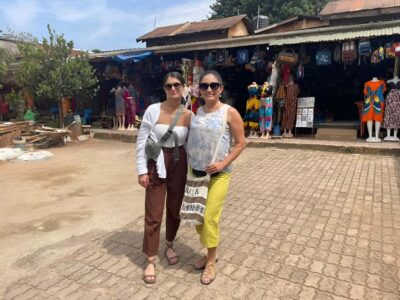 ★ 4.7City Guided walking sightseeing TourFrom $2252 reviews
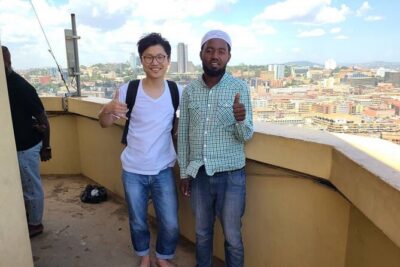 ★ 5.0Kampala Heart of Walking AdventureFrom $2643 reviews
★ 5.0Inside Kampala walking tour (Female guided)From $3540 reviews
★ 5.0Kampala Heart of Walking AdventureFrom $2643 reviews
★ 5.0Inside Kampala walking tour (Female guided)From $3540 reviews
 ★ 5.0Kampala’s walking city Tour ExperienceFrom $4018 reviews
Browse the lists this tour appears in