
REVIEW · KAMPALA WALKING TOURS
Steve Kampala Walking tours (Airpals Safaris tour)
Kampala is better on foot. This small-group walking tour, capped at 10 people, helps you get your bearings fast and understand Uganda’s bigger story as you move through the city. I love the Bagala Craft stop for easy souvenir shopping and the Namirembe Kathedrale hilltop views that make Kampala feel real, not just like a drive-by. One thing to consider, some days feel more like steady movement than constant storytelling, especially when you’re in busy markets.
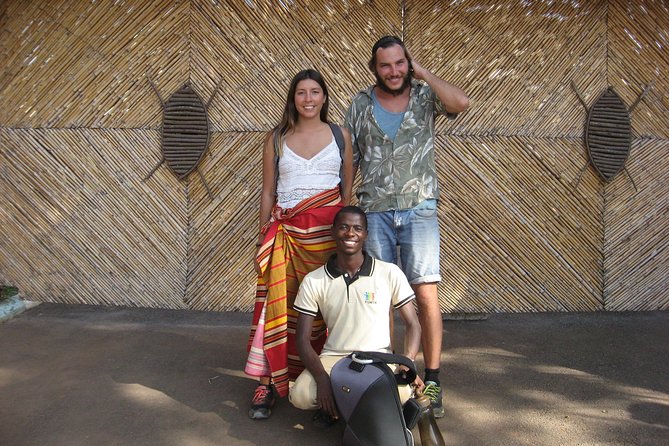
What I really appreciated is how guides like Steve, and sometimes guides such as Getrude or Ben, can keep the walk organized while still making room for questions. Expect a half-day format (morning or afternoon) that covers major local areas without turning it into a checklist of big buildings only. If you’re the type who wants deep explanations at every single stop, bring a curious mindset and ask for more context early.
In This Review
- Key highlights worth your time
- Kampala on foot with a 10-person group
- Your half-day route: the flow from university gates to hilltop views
- Stop 1: Makerere University main gate walk
- Stop 2 and 3: Katanga Slum walk, then Bagala Craft shopping
- Stop 4: Independence Monument lesson
- Stop 5: Nakasero Market and fruit tasting observation
- Stop 6: Temple SSDM Shree Sanatan Dharma Mandal architecture
- Stop 7: World War II Memorial, with both sides acknowledged
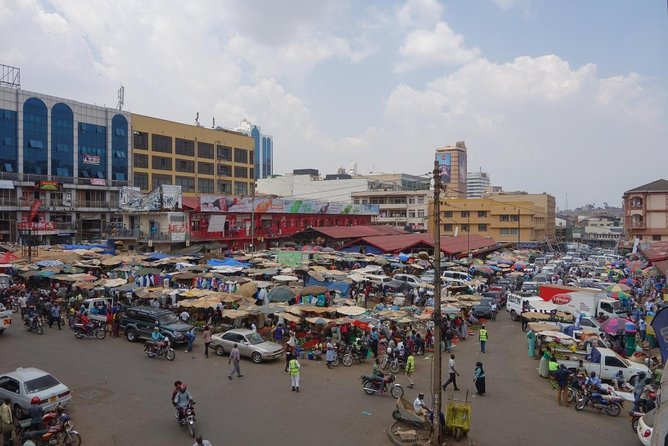
- Stop 8 and 9: Old Taxi Park chaos, then Owino Market scale
- Stop 10: Namirembe Kathedrale hilltop panorama
- Price, pacing, and how to get the most out of your guide
- Who should book this walking tour, and who might not love it
- Should you book Steve Kampala Walking Tours (Airpals Safaris tour)?
Key highlights worth your time
- Up to 10 people means you can actually hear the guide and stay together on crowded streets
- Makerere University to Namirembe Kathedrale gives you a clean city map in one session
- Katanga Slum walk offers a human, on-the-ground contrast to the monuments and markets
- Bagala Craft is built for souvenirs, not just window shopping
- World War II Memorial and Independence Monument add history without turning heavy
- Old Taxi Park, Nakasero, and Owino Market show Kampala’s daily energy from different angles
Other Kampala walks, guide by guide
- Kampala’s Best Experience walking tour
★ 5.0 · 137 reviews - Kampala Walking City Tours (Women Guided)
★ 5.0 · 115 reviews - Kampala Walking Tour (3 Hours) with Optional Gaddafi Mosque Visit
★ 5.0 · 112 reviews - Kampala: City Guided walking sightseeing Tour
★ 4.7 · 52 reviews
Kampala on foot with a 10-person group
A good walking tour does two things at once. It helps you see places you’d probably miss alone, and it teaches you how the city works. This one leans hard into that second part, with history and modern-day realities mixed into everyday streets.
The group size matters. With a maximum of 10 people, it’s easier to keep up and easier for the guide to notice if you’re struggling with pace, questions, or directions. The format is also a practical way to experience Kampala without needing complicated planning or multiple rides just to see a few areas.
You’ll also feel the tour’s “local lens.” Instead of focusing only on iconic attractions, the route includes markets and neighborhoods where daily life is the main event. That’s exactly why many people rate this tour so highly, especially for the sense of safety and care during transitions between crowded areas.
Your half-day route: the flow from university gates to hilltop views
This experience is built as a compact circuit, designed to cover a lot in about 4 hours. In practice, the pace can vary by the guide and the day’s crowd levels, so plan to stay flexible. You also end up with a natural rhythm: university and civic history, then markets and religious architecture, then memorials, then the city view that ties it all together.
One detail I like for planning is the mobile ticket setup. It reduces friction at the start, and it makes it easier if you’re moving fast between activities. The route also keeps admission simple, since the stops listed are marked as free entry.
There’s also a split concept to the day. The first part of the tour ends around Namirembe Cathedral, and a second part can run on toward Kasubi tombs. If you’re short on time, you can still get a lot out of the Namirembe segment alone.
Stop 1: Makerere University main gate walk
The tour begins at the Makerere University main gate, starting with a short walk through the university. Even if you have no personal connection to the school, the effect is immediate. You feel how Kampala’s modern life sits next to education, youth culture, and a long-running sense of national purpose.
Why this matters for value: you’re not just jumping into markets right away. You’re given a civic anchor first. That helps later when you’re talking about independence, national identity, and how political changes shape daily life.
Time is tight here, about 15 minutes, so don’t expect a campus tour. Instead, think of it as a gateway moment, a place where the guide can set context before the street noise takes over.
More Uganda walks at street level

Stop 2 and 3: Katanga Slum walk, then Bagala Craft shopping
Next comes Katanga Slum, and this is one of the emotional contrasts of the route. The walk is short, but the point is bigger than scenery. You’re seeing how different people live in the city, in a way that’s hard to get from photos or a quick drive.
A note on how to approach this stop: if you want the most out of it, stay respectful and listen first. Ask questions only when the guide invites it, and don’t try to turn people’s lives into entertainment. When guides do this well, it stops being sad spectacle and becomes perspective.
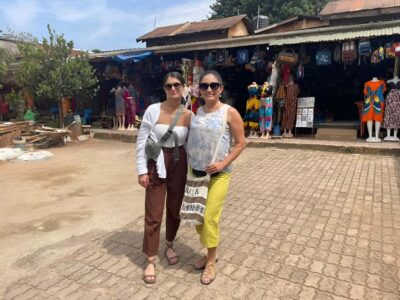
From there, the tour shifts gears to Bagala Craft, described as the biggest craft market in Kampala. This is your structured shopping window, about 20 minutes. If you want souvenirs without spending your whole afternoon haggling, this is exactly why it’s useful.
Potential drawback to keep in mind: when you bounce from slum life to a shopping market, your brain needs a reset. If you’re sensitive to mood swings, take a breath, use the shopping time to ask practical questions about local crafts, and keep moving.
Stop 4: Independence Monument lesson
At Independence Monument, the tour slows slightly for a seated history moment. It’s a concise way to understand Uganda’s story before and after independence, and why the monument matters in a real, political sense.
This stop works because it doesn’t feel like a lecture from a distance. You’re physically at the point of memory, which makes the conversation stick. Even if you already read basic history, hearing it tied to a local landmark helps you understand what national pride, struggle, and change look like on the ground.
If you’re the kind of traveler who likes context, this is one of the stops where you’ll likely feel the guide’s best storytelling. If your focus is mostly photos and errands, you might see it as a brief pause, but it still adds structure to the rest of the day.
Stop 5: Nakasero Market and fruit tasting observation
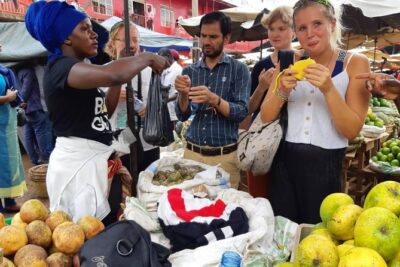
Then you’re at Nakasero Market, a busy place where the tour notes Uganda’s food production. The idea here is straightforward: watch and taste different fruits, and see how everyday food reality connects to national self-sufficiency.
This stop is also a good break from “monument fatigue.” Markets are sensory, fast, and full of small details. The value isn’t in buying a lot. It’s in learning how people live, shop, and make decisions in real time.
Time here is around 15 minutes, so don’t expect a full market wander. You get a focused look, and if you want more later, the guide often can point you toward how to return efficiently.
Stop 6: Temple SSDM Shree Sanatan Dharma Mandal architecture
Next up is Temple SSDM Shree Sanatan Dharma Mandal, where you go inside to see the building’s beauty and architecture. Religious architecture can easily become a “look but don’t touch” moment on tours. Here, it’s used as a cultural contrast, showing how different communities shape Kampala’s city space.
If you enjoy details, this is one of the stops worth slowing down for. Look at the design language, how people move through the space, and what feels welcoming or formal. Even with short time, the interior setting tends to make the guide’s commentary land better than it does in open-air chaos.
Practical tip: dress and behavior matter in places of worship. The tour itself doesn’t list rules, but it’s smart to be modest and follow whatever guidance the guide gives you before you enter.
Stop 7: World War II Memorial, with both sides acknowledged
At the World War II Memorial, you get a brief history of Uganda’s participation and a discussion of positive and negative outcomes. This is not a long museum-style visit. It’s a targeted conversation, using the memorial as a physical prompt to think about consequences.
Why I like this for value: it keeps history from becoming neat and one-note. It’s easier to remember that modern identities were shaped by global events, and not only by local politics.
If you’re trying to choose between tour stops, this one tends to appeal to travelers who want a broader geopolitical view without spending hours reading placards. It also balances the independence theme with a different kind of “why did this matter” lens.
Stop 8 and 9: Old Taxi Park chaos, then Owino Market scale
Then comes the loud part of the city, Kampala Old Taxi Park. The tour frames it as organized chaos, with commuter taxis and the energy of passengers. This is your chance to understand how people really move through the city, where rides originate, and how quickly crowds form and disperse.
Right after, you hit Owino Market, often described as the biggest market in Kampala and known for second-hand clothes and a wide range of goods. This is a major contrast from taxi-park movement. Here, the pace slows into browsing, bargaining, and searching.
These two stops together work because they connect transportation and consumption. You see how commuting shapes the flow of people, and how the market shapes what people buy, wear, and carry.
A balanced consideration: these areas can feel like a lot, even when the stop times are short. If you expect every minute to come with a story, you might wish for more explanation when the group is just walking and the guide is quiet. The good news is the stops are still worth it for the atmosphere and the practical “see it in person” payoff.
Stop 10: Namirembe Kathedrale hilltop panorama
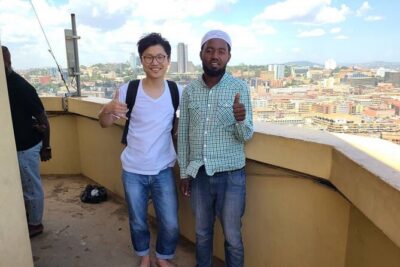
The final listed stop is Namirembe Kathedrale, located on a hill with a view of Kampala. This is one of those moments that makes the whole walk click. After markets, taxis, and monuments, the skyline lets you connect dots across the city.
The key value here is perspective. You’re not just collecting places, you’re understanding positioning and distance. It also helps you reframe what you saw earlier: the slum walk, the civic monuments, the markets, and the transport hubs all sit inside a bigger geography.
Time is short, but a view like this can be more memorable than another 30 minutes in a crowd. If you’re a photo person, you’ll want to pause here and slow down for a few shots, even if the group is ready to move.
Price, pacing, and how to get the most out of your guide
The tour price is listed at $28 per person for about 4 hours. For Kampala, the value is mainly in guide time plus route design. You’re paying to have someone connect history to the places you’re walking through, and to get you safely around areas you might not feel comfortable exploring alone.
Most people rate the tour very highly, and those comments usually point to three things: the guide’s friendliness, the sense of safety, and the fact that the walk covers real parts of the city instead of just the obvious stops. Some guides also help with practical stuff at the end, like getting clear on transport or sorting an issue so you can move on without stress.
Still, pacing is the main variable. A minority of experiences mention the tour ending sooner than expected or the guide sounding like they were going through facts quickly. That can happen if the day is crowded, if questions eat time, or if the guide is handling a group that needs extra support.
How do you guard against a disappointing pace? Do two simple things:
- Ask one clear question at the start, then another at the halfway point, so the guide knows where you want depth.
- If you feel the explanation level dropping, ask for a comparison, for example how life around the markets differs from what you just heard at the monument.
This tour is at its best when you treat it like a conversation while still following the group’s flow.
Who should book this walking tour, and who might not love it
I’d recommend this tour if you want a mix of history and daily life in one half-day. It’s especially good if you like contrasts, university gate to slum walk, craft market to independence history, memorials to taxi-park motion.
It’s also a solid fit if you like small group travel. With a max of 10, you’re not lost in a crowd, and you have a better shot at personal answers.
You might want to skip or adjust expectations if you hate market environments, or if you need constant narrative at every stop. The route includes places where you’re mostly observing and moving, not staying to linger.
On the other hand, if you’re flexible and curious, those “just walking” segments are often the most real parts of the experience. They show you how Kampala feels moment to moment.
Should you book Steve Kampala Walking Tours (Airpals Safaris tour)?
Yes, with a smart expectation. This is a practical Kampala introduction that uses walking to build context fast, with strong value in the city’s contrasts. If you care about independence history, the WWII memorial perspective, and seeing how markets and transport actually work, this tour is a strong choice.
Book it especially if you like small groups and want help getting around with confidence. If you prefer a highly scripted museum-style experience, or if you expect every minute to be a long story, consider choosing your moment, or ask for more emphasis on the areas you care about most.
Other Uganda Trips


The Rest of the Uganda File
Kampala on Foot, Guide by Guide


Other Uganda trips we have written up
- 7-Day Uganda Adventure Safari – Midrange Lodges★ 5.0 · 3 reviews
- 5 days gorillas and chimpanzee tracking★ 4.5 · 3 reviews
- A Thrilling 1-Day Rhino Tracking Tour in Uganda★ 5.0 · 3 reviews
- 3 Days Murchison Falls Wildlife Safari★ 4.5 · 3 reviews
- 10 Day Gorilla Chimps and Big 5 Safari★ 5.0 · 3 reviews
Kampala Walking Tours, compared.
 ★ 5.0Kampala’s Best Experience walking tourFrom $33137 reviews
 ★ 5.0Kampala Walking City Tours (Women Guided)From $34115 reviews
 ★ 5.0Kampala Walking Tour (3 Hours) with Optional Gaddafi Mosque VisitFrom $32112 reviews
 ★ 4.7City Guided walking sightseeing TourFrom $2252 reviews
 ★ 5.0Inside Kampala Walking Tour (Female Guided)From $2552 reviews
 ★ 5.0Kampala Heart of Walking AdventureFrom $2643 reviews
★ 5.0Inside Kampala walking tour (Female guided)From $3540 reviews
★ 5.0Kampala Heart of Walking AdventureFrom $2643 reviews
★ 5.0Inside Kampala walking tour (Female guided)From $3540 reviews
 ★ 5.0Free Female Guided Walking Tours Kampala (3 Hours)From $3025 reviews
Browse the lists this tour appears in