
REVIEW · RWENZORI & HIGHLAND ADVENTURES
Rwenzori Mountains Trekking with Margherita Peak Summit
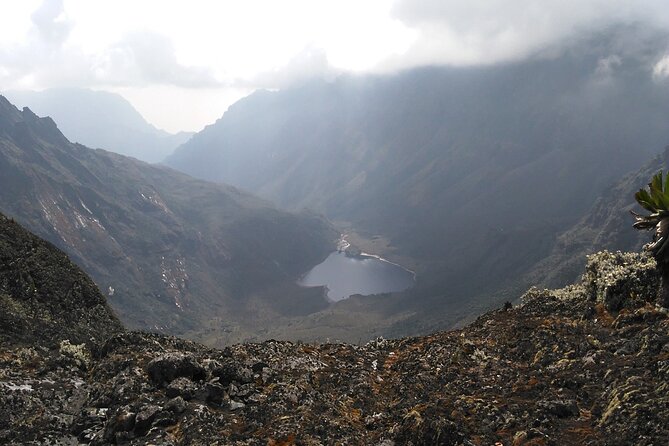
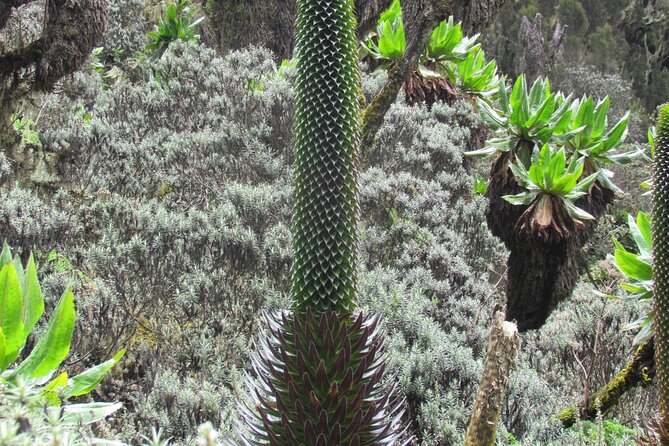
Margherita Peak hits different. This 7-day Rwenzori Mountains National Park trek climbs through rainforest, bamboo, and high-altitude bog to the Margherita Peak (5,109m) summit zone. I love how the trail mixes wildlife odds with high-end scenery, from possible chimp and colobus sightings in the forest to the Albertine Rift plants like giant heathers, lobelias, and groundsel in the high country (Rwenzori Mountains National Park).
My second favorite part is the way summit day is treated like a real mountaineering walk, not a casual hike. You’ll work over exposed ice, slippery rock, and three glaciers, then come back down to camp. One thing to keep in mind: climbing gear is not included, and the route includes freezing bog and exposed sections where weather and footing matter a lot.
In This Review
- Key highlights worth knowing
- Getting from Entebbe to the Rwenzori start point
- Price and what $1,400 buys you on this trek
- Day 1, Nyakalengijja to Nyabitaba Hut: forest, rivers, and the first climb
- Day 2, Nyabitaba to John Matte Hut: Kurt Shafer Bridge and slippery moss rock
- Day 3, Bujuku River to Bujuku Lake: giant lobelias and true acclimatization
- Day 4, Bujuku to Elena Hut: Groundsel Gully and the cold staging camp
- Day 5, the Margherita Peak push (5,109m): glaciers, exposure, and fog timing
- Day 6, Freshfield Pass and Congo views: from alpine moss to Bujongolo
- Day 7, Kichuchu cliffs to Mihunga gate: the circuit ending you feel in your legs
- Who should book this Margherita Peak trek
- Should you book it
- FAQ
- How long is the Rwenzori Mountains trek with the Margherita Peak summit?
- What is the highest point you reach on this tour?
- Where does the tour start and end?
- Are meals included?
- Is the park admission included?
- Is climbing gear included?
- Is this tour private?
Key highlights worth knowing
- Albertine Rift alpine plants like giant heathers, lobelias, and groundsel show up as the altitude climbs.
- Wildlife can appear early, including possible chimpanzees, black-and-white colobus, blue monkeys, and Rwenzori turraco.
- Bigo Bog crossings are part of the adventure, with tussock stepping over freezing ooze.
- Elena Hut and Stanley Plateau set you up for summit timing, often with fog and cold in the mix.
- Duke of Abruzzi link at Bujongolo rock shelter (1906) gives the descent a historic flavor.
- Professional coordination gets repeated praise in reviews, including communication and flexibility if health issues pop up.
Higher ground: more Rwenzori and Elgon routes
- Rwenzori Mountains Trekking with Margherita Peak Summit
★ 5.0 · 13 reviews
Getting from Entebbe to the Rwenzori start point
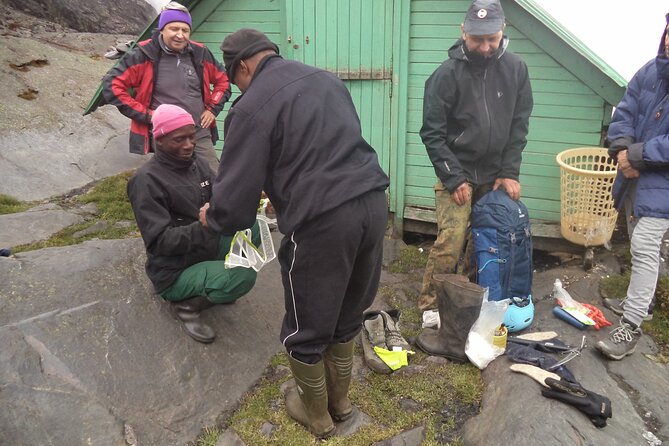
The tour is set up with pickup offered, and your trip begins at Entebbe Airport. From there, a driver guide handles the move to Nyakalengijja for your briefing and equipment organization, so you are not trying to figure out logistics while jet-lagged.
That matters more than it sounds. Rwenzori trekking is remote, and the “start line” is not a neat paved place. Getting your gear checked and your plan confirmed before you hit the forest trail helps you settle into the rhythm of slow uphill climbing and cold night recovery.
Price and what $1,400 buys you on this trek
At $1,400 per person for about 7 days, this is not a budget weekend. But it is also not just “a guide walking with you.” The included meals are clear: breakfast, lunch, and dinner for 7 days. You also get access coverage for park entry, since the admission ticket is listed as free.
The biggest value is that the trek is built around a high-altitude target. Margherita Peak (5,109m) is the type of objective where good coordination matters, because weather can change fast and the terrain is exposed. If you are paying this much, you want the team to handle timing and safety decisions. Reviews repeatedly mention professional guidance and good communication before and during the hike, with names like Johnson and Geofrey showing up in that praise.
The tradeoff is also straightforward: climbing gear is not included. If you already own boots, cold protection, and the right technical kit, this is easier. If you do not, you will need to arrange that planning early, because shopping last-minute in a remote region is never fun.
Day 1, Nyakalengijja to Nyabitaba Hut: forest, rivers, and the first climb
Day 1 starts with briefing in Nyakalengijja, then the trek launches with a mix of farmland and boundary crossing. Once you enter the thick forest along the Mubuku River, the feel changes right away: sound, humidity, and shade do most of the work for you.
From there, the route crosses the Mahoma River tributary, then begins a long steep climb up onto a massive ridge to reach Nyabitaba hut. Plan on about 6 to 7 hours hiking, and the trail begins at roughly 1,036m on the day’s description.
What I like here is that your eyes have something to do besides just watching your feet. In this forest zone, the chances of wildlife come up in the itinerary itself, including possible chimpanzees and sightings like black-and-white colobus, blue monkeys, and the Rwenzori turraco. Even if you only hear movement, the forest does not feel like a corridor. It feels alive.
A drawback to consider on Day 1: you are climbing early. Even if the later days are bigger, the first day uphill push can wear you faster than expected, especially if you came straight from sea level. Start steady, not heroic.
Uganda on foot, more routes reviewed
Day 2, Nyabitaba to John Matte Hut: Kurt Shafer Bridge and slippery moss rock
Day 2 drops from Nyabitaba down toward the Kurt Shafer Bridge, located just below where the Mubuku and Bujuku rivers meet. After that, you pass through a bamboo forest and then hit a long stretch that’s specifically described as slippery, moss-covered rock.
That detail is key. Moss on stone is not just “a bit damp.” It often means slower pace, careful foot placement, and extra energy just to stay stable. The itinerary calls this stretch exhausting, so you should treat it like a technical day even if you are not using ice tools yet.
As you continue, you reach Nyamuleju rock shelter, where views open up to Mount Stanley and Mount Speke. Then the trail moves into the high-altitude plant zone, with giant heather, lobelia, and groundsel, before you finish at John Matte Hut after crossing bog and ending the day with dinner and overnight.
Expect about 7 to 8 hours hiking on Day 2, with the day’s elevation change listed around 854m.
The upside: the transition from forest to high alpine vegetation is gradual enough that you feel the change instead of just arriving “at altitude.” The downside: by the time you reach bog and hut country, you will already be tired from the slippery rock section.
Day 3, Bujuku River to Bujuku Lake: giant lobelias and true acclimatization
Day 3 is shorter on paper, about 4 to 5 hours, but it brings a specific Rwenzori signature: bog travel. You drop down to cross the Bujuku River, then enter Lower Bigo Bog, described as home to giant lobelias.
This is the part where your ankles and calves get a workout, because you are stepping from tussock to tussock. The itinerary is blunt that the bog is rarely crossed without your feet sampling freezing ooze. That means you should assume wet socks are a real possibility and pack your attitude accordingly.
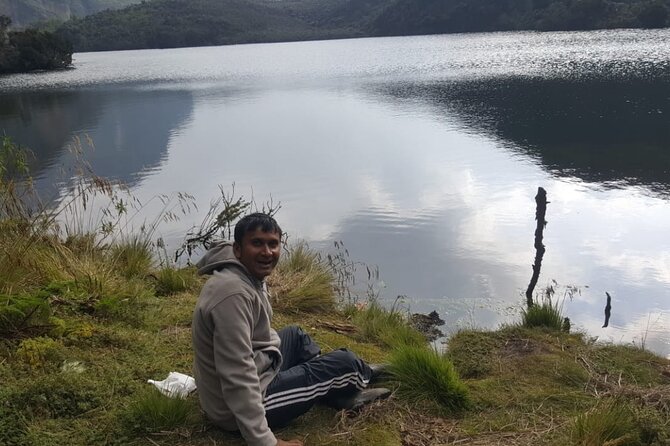
From the lower bog, the route crosses into upper Bigo bog, then reaches Bujuku Lake. You get views of Mount Baker to the South and Mount Stanley to the West, before arriving at Bujuku Hut in a narrow valley below Stuhlmann Pass.
Bujuku Hut is described as good for acclimatization for clients attempting the summits of peaks like Mount Stanley and Mount Speke. Even if your focus is Margherita, that acclimatization logic helps explain why this circuit is designed this way.
What I like most on Day 3 is the balance between effort and rewards. You do real bog work, but you also get that open-water moment at Bujuku Lake where you can look outward instead of down.
The possible drawback is emotional more than physical. Bog travel forces a slower, more cautious pace. If you push, you risk slipping or wasting energy. If you go steady, the day feels manageable.
Day 4, Bujuku to Elena Hut: Groundsel Gully and the cold staging camp
Day 4 continues the bog story but turns the dial from “wet footing” to “cold boulder effort.” You leave Bujuku and the trail goes through more bog while climbing the steep slopes west of the lake.
Then you enter Groundsel Gully, described as magical and forested, before splitting into paths depending on whether you are only trekking or also targeting the peak. The itinerary notes that a left option leads toward Kitandara Lakes and Kitandara Hut for those not climbing Margherita Peak. If you are climbing, the route turns right up to Elena Hut, with views including Mount Stanley, using a steep trail over large boulders.
Because Elena Hut is for peak climbers, this is often where your summit routine really starts. The itinerary specifically frames it as cool and icy, and it sets you up for the next day’s early push.
Plan on about 5 to 6 hours hiking, with the day’s elevation listed around 579m.
The key consideration for Day 4 is pacing. You are building fatigue for summit day. You want to arrive at Elena with enough energy to move fast when conditions are right. That usually means hiking conservatively on the boulder sections, not sprinting to “make up time.”
Day 5, the Margherita Peak push (5,109m): glaciers, exposure, and fog timing
This is the day you came for. The climb to Margherita of Mount Stanley takes about 4 to 5 hours depending on weather and your pace.
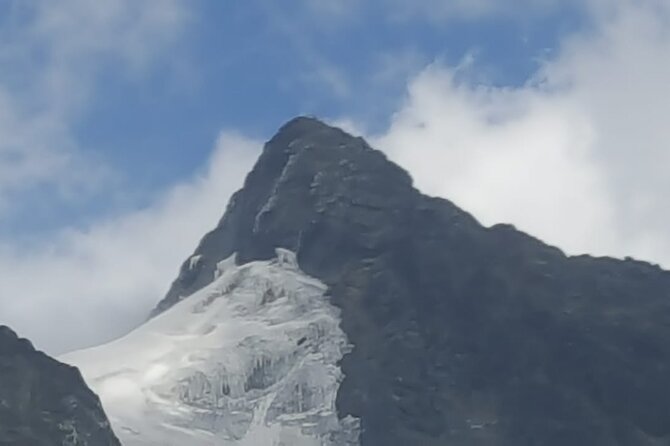
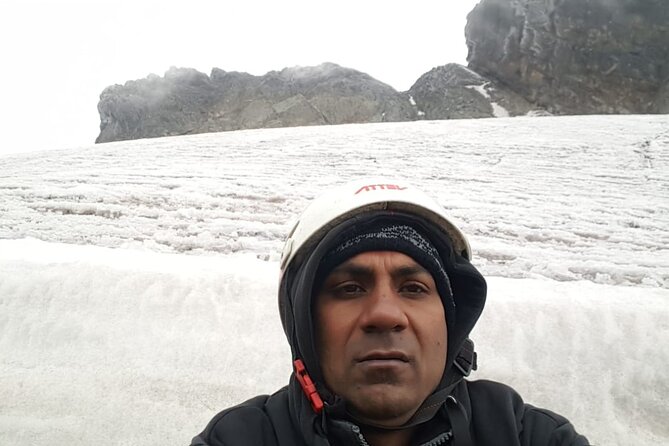
The itinerary describes it as a tough walk over three glaciers, plus slippery rock, ice, and very exposed areas. It notes many sides are open, which is why weather matters. Fog and cold can change visibility and confidence. The day also mentions acclimatization to fog, altitude sickness, and cool weather, which is exactly why the prior hut stages exist.
The route goes over glaciers, crosses the Stanley Plateau, then continues on ascent until you scramble to the summit of Margherita, listed as the highest peak of the Rwenzori mountains at 5,109m.
After that, you descend back to Elena Hut in about 2 to 3 hours.
What I love about this summit day is how the objective is treated honestly. This is not marketed as a stroll, and you get details that help you mentally prepare: ice, exposure, and glacier travel. If you respect that, you reduce drama at the wrong time.
The possible drawback is simple: if you hate cold, or you freeze when visibility drops, this day can feel harsher than you expected. If you like steady effort and you’re good at slow movement under pressure, you will likely handle it better.
And if you want to match your expectations with reality, the most common positive thread in reviews is that the guides made it feel manageable. Names like Joeffery and Johnson appear in praised support, and people highlight that the whole experience can feel comfortable and easy even when the hike is not.
Day 6, Freshfield Pass and Congo views: from alpine moss to Bujongolo
Day 6 is described as a push from Kitandara onto a steep ascent up the headwall. The route spreads out from the base of Mount Baker and continues along the south side to Fresh field Pass (4,282m asl).
At that pass, you get views into the Congo to the west and Mount Stanley to the north. Then you move over long high alpine mossy ground before starting the descent through steep rocky trails.
Along the way you reach the rock shelter at Bujongolo, described as the base camp for the Duke of Abruzzi historic expedition in 1906, then you continue to Guy Yeoman camp for overnight.
Expect about 6 to 7 hours hiking on Day 6.
What I like here is the change from summit-mode intensity to long, high-altitude travel. You are still working, but the day shifts into navigation and endurance. Plus, getting that “beyond the mountain range” view into the Congo adds context to why people chase the Rwenzori.
A drawback to plan for: the descent is steep rocky trail after high ground. Many hikers underestimate how much knee stress shows up after a summit day plus another uphill stage.
Day 7, Kichuchu cliffs to Mihunga gate: the circuit ending you feel in your legs
On Day 7, the route begins below Guy Yeoman and descends the cliffs of Kichuchu. After Kichuchu, the path becomes muddy and crosses the Mubuku River twice through bamboo forest.
Then you climb downwards to Nyabitaba to complete the circuit, continue descending Nyabitaba Camp, and finish by evening at Mihunga gate.
The descent duration is listed as 7 to 8 hours, so treat Day 7 as a full day. It is not a gentle end. You’ll likely finish tired in the best way.
What I like about ending at Mihunga gate is that it gives closure. You return through familiar regions of the trek, but at this point the goal is simply safe, steady walking and getting back to civilization.
One consideration: after a week of altitude and wet terrain, your feet may be your main concern. Mud, river crossings, and bamboo forest trail conditions mean you will likely stay damp again.
Who should book this Margherita Peak trek
You should consider this trek if you want a true Rwenzori Mountains National Park experience, not a drive-by nature walk. The trail goes through rainforest, bamboo, and alpine bog, with wildlife potential early on and special plants as you climb.
You should also consider it if you are comfortable with cold and exposed terrain. Margherita Peak includes glaciers and very exposed areas, so this is for people who take safety and pacing seriously.
It also helps if you are motivated by the “why” behind the route. Staged camps like Bujuku Hut exist to support acclimatization. Elena Hut is a summit staging camp. Bujongolo ties the region to the 1906 Duke of Abruzzi expedition. Those details turn a hike into a story you can feel.
Who might think twice: if you hate heights, dislike glacier terrain, or do not have the climbing gear needed for this kind of summit attempt. Since climbing gear is not included, you should not assume you can solve that on the fly.
Should you book it
If you are set on a serious Rwenzori high-altitude objective, this is a strong option. The trek is built around a clear summit target at 5,109m, and the included meals plus free admission make the $1,400 feel more “all-in” than it first appears. The repeated praise for organization and guide support, including people named Johnson and Geofrey, is exactly what you want on a route where weather, ice, and exposure matter.
Book it if you:
- want genuine Rwenzori trekking, with bog, glaciers, and alpine plants
- can handle long hiking days and cold conditions
- already have the climbing gear, or you can arrange it before departure
Skip it if you:
- are not ready for exposed glacier and ice terrain on summit day
- need an all-inclusive gear solution, since climbing gear is not included
FAQ
How long is the Rwenzori Mountains trek with the Margherita Peak summit?
The trek is listed as 7 days (approx.), with daily hiking from about 4 to 8 hours depending on the day.
What is the highest point you reach on this tour?
You attempt Margherita Peak, listed at 5,109m asl.
Where does the tour start and end?
The tour starts at Entebbe Airport (Entebbe, Uganda) and ends back at the meeting point.
Are meals included?
Yes. Breakfast, lunch, and dinner are included for 7 days.
Is the park admission included?
Yes. The admission ticket is listed as free for the trekking days.
Is climbing gear included?
No. Climbing gear is not included, so you’ll need to bring or arrange it yourself.
Is this tour private?
Yes. It is listed as a private tour/activity, meaning only your group participates.
Uganda on Foot
The Rest of the Uganda File
Uganda Above the Treeline
Other Uganda trips we have written up
- 7-Day Uganda Adventure Safari – Midrange Lodges★ 5.0 · 3 reviews
- 5 days gorillas and chimpanzee tracking★ 4.5 · 3 reviews
- A Thrilling 1-Day Rhino Tracking Tour in Uganda★ 5.0 · 3 reviews
- 3 Days Murchison Falls Wildlife Safari★ 4.5 · 3 reviews
- 10 Day Gorilla Chimps and Big 5 Safari★ 5.0 · 3 reviews
Rwenzori & Highland Adventures, compared.
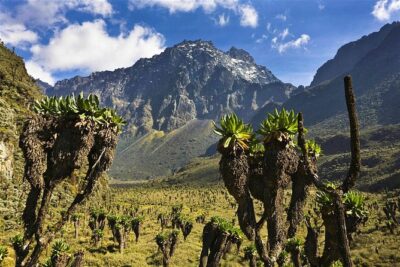 ★ 5.07 Days Rwenzori Summit (Margherita Peak) HikeFrom $1,43517 reviews
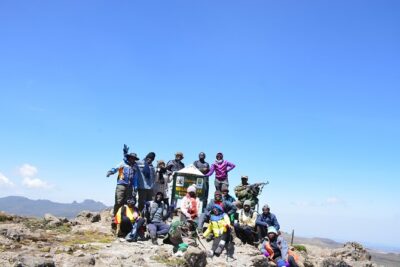 ★ 5.04 Days mount Elgon Trek, 4321m a.s.lFrom $55011 reviews
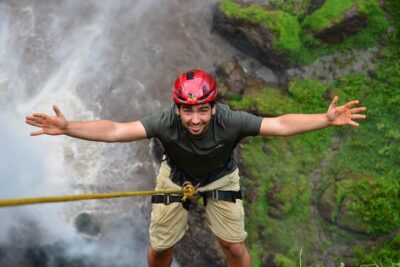 ★ 5.02 Days Abseiling and Rock ClimbingFrom $1008 reviews
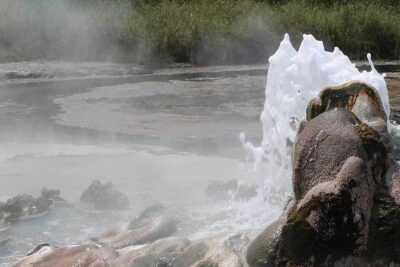 ★ 5.0Hot Springs Exploration and Hike CratersFrom $2566 reviews
 ★ 4.5Mountain Rwenzori Trekking Uganda 9 Day SafariFrom $2,3903 reviews
Browse the lists this tour appears in