
REVIEW · RWENZORI & HIGHLAND ADVENTURES
Mountain Rwenzori Trekking Uganda 9 Day Safari
“Mountains of the Moon” feels oddly personal. This 9-day Rwenzori trekking safari in Western Uganda pairs serious altitude hiking with a rare chance to walk through ecosystems that stay cold and wet year-round, ending at Margherita summit in the Rwenzori Mountains National Park. I really like how the route is structured around hut nights and named passes, so you always know what comes next.
What I also like is the balance between big scenery and real trail work: river crossings, bamboo sections, bogs, and high alpine heather that makes you slow down and pay attention. I also appreciate that this trip uses a private group format and includes core park access and meals. The main consideration is simple: it’s strenuous, and altitude can be demanding even if you’re fit, so you should plan for slow days and weather that can change trail conditions.
In This Review
- Key highlights you can actually plan for
- Entering the Rwenzori: what makes this trek different
- Price and value: what your $2,390 budget really covers
- Day 1 from Kampala toward Kasese, plus the equator moment
- Day 2 Nyakalengija to Nyabitaba hut: plantations, homesteads, and river crossing
- Day 3 to John Matte hut: bamboo forest and heather country
- Day 4 John Matte to Bujuku hut: bogs, Bigo bog, and the “everlasting flower”
- Day 5 Bujuku hut to Scott Eliot Pass and Elena hut
- Day 6 Elena hut to the Stanley plateau and Margherita Glacier to summit
- Day 7 to Freshfield Pass, panoramic ridge walking, and Kabamba rock shelters
- Day 8 Guy Yeoman hut back to Nyabitaba: Mubuku River and the home stretch feeling
- Day 9 downhill to park headquarters and back to Kampala
- Guides, pickup, and how Travelmonke Tours and Travel tends to run the show
- What to expect on the ground: weather, huts, and your body
- Should you book this 9-day Rwenzori trek?
- FAQ
- What is the starting location for this trek?
- How long is the Mountain Rwenzori trekking experience?
- How much does the tour cost?
- What is included in the price?
- What is not included?
- Do I get help with equipment?
- Is this a group tour or private?
- What fitness level do I need?
- What is the cancellation policy?
- Is weather considered for the trip?
Key highlights you can actually plan for
- Margherita summit focus in the Rwenzori range, described as the highest peak in the group and third highest in Africa
- Park briefing and equipment hire at Rwenzori Mountains National Park before the trails start
- Day-by-day hut route with specific hut names like Nyabitaba, John Matte, Bujuku, Elena, and Kitandara
- High passes including Scott Eliot Pass and Freshfield Pass, both over 4,200 m
- Big-bird and mammal country in a protected area with 70+ mammals and 217 bird species, including Albertine Rift endemics
- A local human element through Bakonzo village country and nature walks in the communities near the trek
Higher ground: more Rwenzori and Elgon routes
- Rwenzori Mountains Trekking with Margherita Peak Summit
★ 5.0 · 13 reviews
Entering the Rwenzori: what makes this trek different
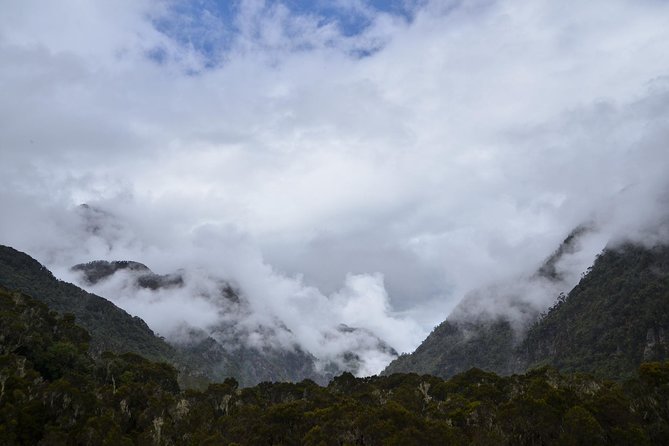
Rwenzori is not just another mountain hike. This is Uganda’s highest mountain range, famous for permanently snow-capped peaks, and for the way the vegetation changes as you gain altitude. You’re walking through different “altitude worlds” in the same trip: lower plantations and homesteads, then bamboo and heather, then mossy zones and boggy trail sections near the high passes.
The name Mountains of the Moon fits, but it’s the practical details that win you over. You’ll be moving through a sequence of huts and passes rather than doing a random, day-to-day shuffle. That structure matters because it turns an intimidating big goal, like Margherita summit, into a trail you can train for step by step.
The wildlife side is also real. The park is described as home to more than 70 mammals and 217 bird species, including 19 Albertine Rift endemics. Even if you never see a “headline” animal, you’ll still feel like you’re in a protected system that’s worth the effort.
Price and value: what your $2,390 budget really covers
This trek is priced at $2,390 per person for about 9 days, starting from Kampala with pickup offered. For mountain trips, the value question is always: what costs are already handled, and what costs land on your lap later?
Based on what’s listed as included, your money covers:
- all fees and taxes
- meals: breakfast (7), lunch (8), dinner (7)
- admission tickets marked as free in the provided details
What is not included is just as important:
- guide service fee
- private expenses
- travel insurance
That split usually means the trip operator is handling the bulk of the “framework” costs, especially around park access and day meals. The biggest variable you control is insurance and personal spending.
If you’re comparing options, don’t just compare sticker price. Compare how much you still need to pay for park entry, meals, and guided support. Here, the meal plan and fees are part of the baseline, which makes the budget easier to stabilize.
Day 1 from Kampala toward Kasese, plus the equator moment
Your trek begins with pickup from a suitable location in Kampala, then a drive south-west toward the Rwenzori region. You’ll stop at the equator for photos, plus a set of simple experiments that make the equator feel less like a point on a map and more like a place you can stand on.
Next comes Mbarara town for lunch. You reach the Rwenzori area in the evening and sleep at your choice accommodation for dinner and overnight so you’re rested enough to start early the next day.
Why this first day is worth keeping: it gives you a gentle on-ramp. You’re not starting with a steep climb. You’re building your rhythm, getting time to think through your kit, and adjusting to the pace of the region before you enter the national park world.
Possible drawback: day 1 is travel-heavy. If you dislike long drives, plan for a slower start in your mindset. Hydration and sleep matter, because tomorrow is about getting rolling at the park headquarters.
Uganda on foot, more routes reviewed
Day 2 Nyakalengija to Nyabitaba hut: plantations, homesteads, and river crossing
Day 2 starts with a report at Rwenzori Mountains National Park headquarters for a briefing and equipment hire. That briefing is more important than it sounds. Even good hikers get humbled by the mix of altitude, humidity, and wet trail surfaces in the Rwenzori.
Then you start from Nyakalengija and hike through plantations and Bakonjo country. You’ll pass humble homesteads, cross the Mahoma River, and arrive at Nyabitaba hut at about 2,652 m.
The hike is listed as about 5 to 6 hours, and the payoff is views of portal peaks and Mount Kyniangoma. You may also notice monkeys and birds in this lower stretch, since the park has that mix of species and plant types.
Why this day matters: it’s your first real acclimation day without throwing you into the hardest altitude sections. You learn how your body responds to the incline and how wet trail conditions affect your pace.
A consideration: the day includes a river crossing early in the hike. If you’re prone to cold feet, pack and protect accordingly and move steadily through the crossing zones.
Day 3 to John Matte hut: bamboo forest and heather country
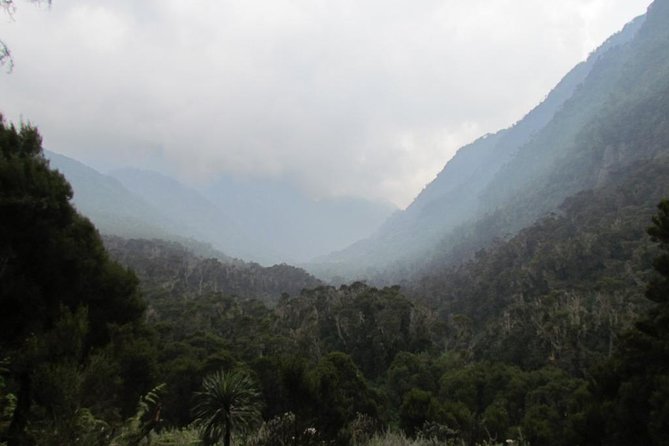
On day 3, you descend from the ridge to the Mukubu River, then climb through a bamboo forest toward John Matte hut (3,380 m). Your afternoon adds more varied terrain: climbing and hopping through boulders, then ascending via the north side of Bukuju River through giant heather forest.
That route is described as about 5 to 6 hours again, which feels manageable until you remember you’re working higher now. Dinner and overnight are at John Matte hut.
What makes this day special is the mix. Bamboo can slow you down, heather can be visually stunning but physically tiring, and boulder hopping requires careful footing when you’re already gaining altitude. This is the kind of day that makes you grateful for good pacing.
Possible drawback: if your hiking style is “power up fast,” this is the day to resist. The route asks for steadier footwork more than speed.
Day 4 John Matte to Bujuku hut: bogs, Bigo bog, and the “everlasting flower”
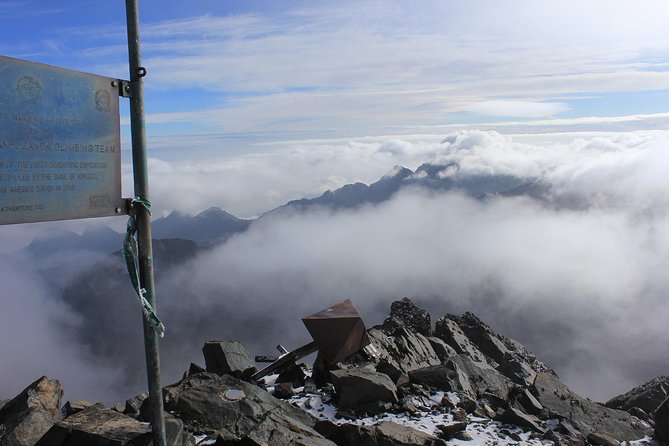
Day 4 takes you from John Matte hut at 3,380 m to Bujuku hut (3,977 m). Along the way, bogs are a standout feature. You traverse via Bigo bog and Lake Bujuku, and you’ll hear about the mythical everlasting flower, described as remaining on the plant for about 40 years.
The hike is listed at around 5 to 6 hours, and you sleep at Bujuku hut.
This is a day where the Rwenzori identity becomes obvious. High mountains can be rocky and sharp, but Rwenzori can also feel like you’re walking through living, wet sponge. That has two big effects:
- Your feet stay busy, even when the grade doesn’t feel insane.
- The trail can be slower and slippery, so you’ll want patience.
Drawback: bog sections are physically demanding in a different way than a rocky trail. Expect tired legs, not just winded lungs.
Day 5 Bujuku hut to Scott Eliot Pass and Elena hut
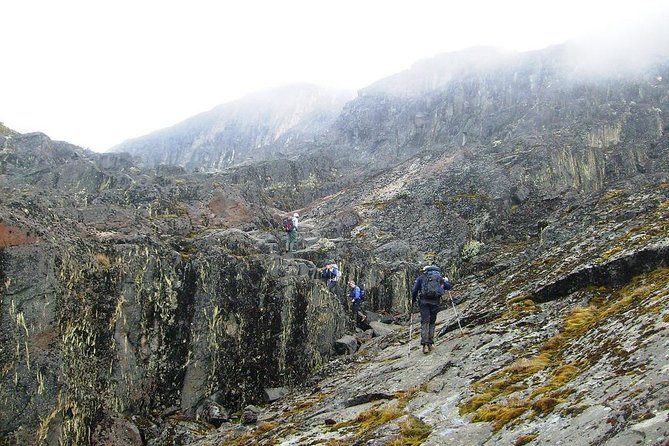
On day 5, you leave Bukuju hut and climb through moss-covered groundsel greenery. You work your way to Scott Eliot Pass (4,372 m) between mountains Baker and Stanley, then continue to Elena hut (4,540 m) for the night.
This is also described as about 5 to 6 hours, with an important focus on positioning you for the summit push next day. You’ll sleep preparing to ascend to Mount Stanley the following day.
Why you should care about this day: Scott Eliot Pass is a real altitude checkpoint. Even if you feel fine at the start, the climb to a high pass usually forces a decision. Either you settle into a controlled pace and breathe, or you surge and pay later.
Possible drawback: if you’re tempted to treat the pass like a normal viewpoint stop, don’t. Plan for time on the climb and prioritize steady effort.
Day 6 Elena hut to the Stanley plateau and Margherita Glacier to summit
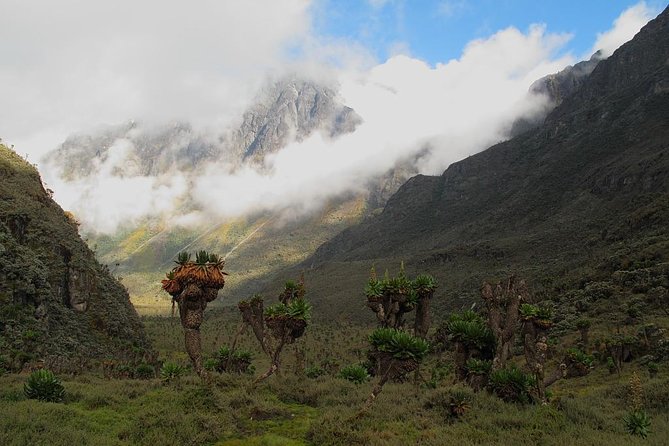
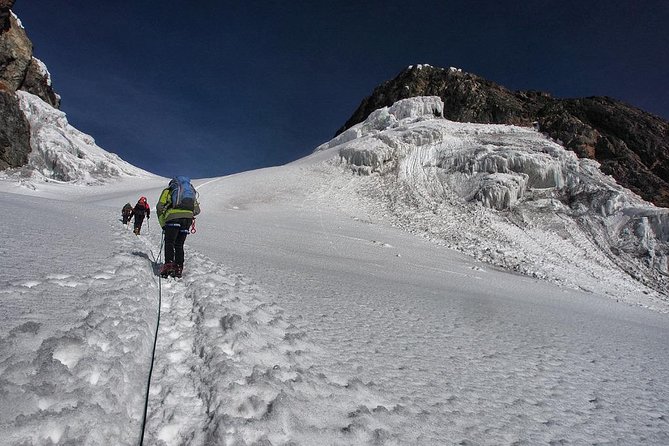
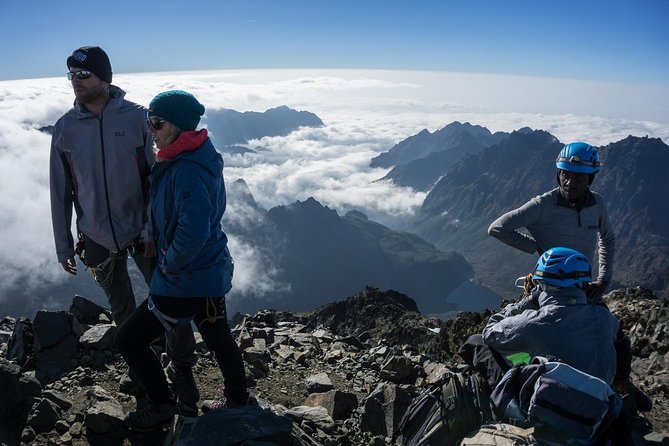
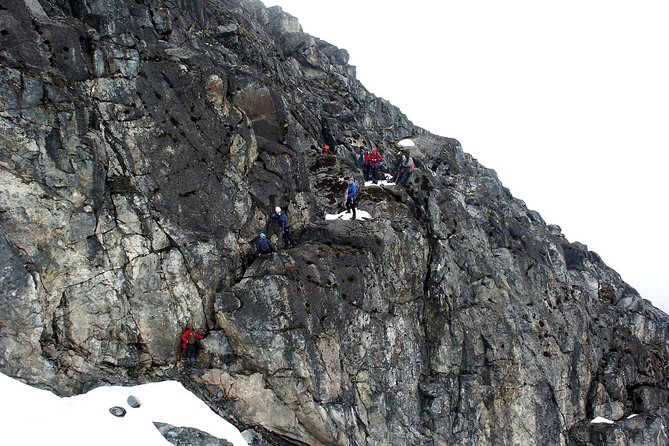
Day 6 is the centerpiece day, starting with an early hike from Elena hut to the Stanley plateau. As you cross in a north-western direction, you follow the Margherita glacier toward the summit. The summit hike is listed as about 3 hours.
After reaching the summit, you descend via Elena hut and move toward the upper and lower Kitandara lakes, passing through thick “mad” and then halting at Kitandara hut. From there, the route description says you proceed to climb Mount Baker or Mount Louig do Savoia and to the peak Vittorio sella.
That’s a lot of altitude work in a single day, at least on paper. In practice, your guide’s pacing and weather will decide how hard you push after the main summit effort. Either way, you’re moving in and out of zones where the air feels thinner and the weather can turn fast.
This is where the trip earns its name. Permanently snow-capped peaks are not just a brochure promise here. The glacier route and high plateau feel like the Rwenzori is its own weather system.
Consideration: this is high-stakes hiking. Even with good health, you should go into the day with a calm pace and avoid “hero hikes” that ignore fatigue. If you’ve had altitude issues before, tell your guide early.
Day 7 to Freshfield Pass, panoramic ridge walking, and Kabamba rock shelters
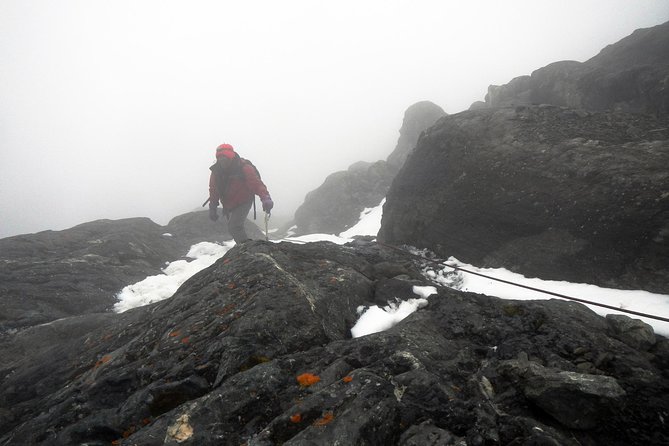
Day 7 starts from Lake Kitandara and heads up to the Freshfield pass (4,282 m). Then you hike along a ridge of high alpine mossy glades before descending through rocks and bogs.
Here, the route highlights panoramas of Mount Stanley, Mount Baker, and Mount of Savoy, which is exactly the kind of payoff you earn on a day built for patience.
Later you move along a soggy trail toward Bujongolo, Akendahi, and Kabamba rock shelters. This is where the Kabamba valley begins, and then you hike to Guy Yeoman hut (3,261 m) for the night. The hike is listed as up to 6 hours.
Why this day is a favorite for many people: it’s long enough to feel like a trek, but not as brutally “pass-focused” as days 5 and 6. It’s also the kind of route where the scenery stays interesting, because you’re never in a single boring terrain type.
Possible drawback: “soggy trail” is a clue. Your feet will feel it by the end. Bring a plan for drying and protecting your footwear and socks between hut nights.
Day 8 Guy Yeoman hut back to Nyabitaba: Mubuku River and the home stretch feeling
On day 8 you leave Guy Yeoman hut and hike toward Nyabitaba hut. The route includes descending along Mubuku River, passing Kichuchu rock shelter, then joining the original route, down to Bujuku River. The hike is described as about the last 2 to 3 hours toward Nyabitaba hut, where you spend the night.
This day is a transition day. After the bigger altitude landmarks, you’re shifting back toward the ridge you came from. That usually feels both relieving and mentally tricky. Relieving because you’re not climbing into the highest zones again, mentally tricky because you still have to stay steady on wet and slippery surfaces.
Consideration: descending can be harder on knees than the climb is on lungs. If you have knee issues, take longer strides, use trekking poles if you have them, and go slow.
Day 9 downhill to park headquarters and back to Kampala
Day 9 starts with leaving Nyabitaba hut in the morning. You descend steeply off the ridge through lush vegetation to the base of the mountain. Then you return to the park headquarters to hand in any equipment you hired and begin the drive back to Kampala, arriving late evening.
This final day is about wrapping up cleanly. Equipment return matters, and it also gives closure to the whole trip structure. When you reach the base and see normal traffic and people again, you’ll understand how different the mountain zone is from daily life.
A useful mindset shift: treat day 9 as a steady finish, not a “race to be done.” That keeps the last day comfortable and reduces slip risk.
Guides, pickup, and how Travelmonke Tours and Travel tends to run the show
This is run by Travelmonke Tours and Travel, and the format is listed as a private tour, meaning only your group participates. That matters on a trek, because the guide can set a pace that fits your fitness level and your comfort with altitude.
You may also get a guide like George, who has been described as kind, friendly, and well-informed during other Uganda days. Having a guide who keeps things calm and clear is a huge deal on summit-focused itineraries.
Pickup is also offered, and the meeting point is listed as Entebbe Airport (with opening hours shown in the details). If you’re arriving through Entebbe and you land at an awkward hour, it’s worth confirming your exact pickup time early.
What to expect on the ground: weather, huts, and your body
Even when the route sounds precise, the day-to-day feel depends on conditions. The trip notes that it requires good weather. On a mountain like Rwenzori, “good weather” means:
- you can see the peaks and passes more clearly
- wet sections might still be wet, but they’re safer
- glacier routes are not compromised beyond what your team can manage
Physically, the trip is described as suited for moderate physical fitness. That doesn’t mean easy. It means you should be comfortable hiking for multiple hours per day and coping with changing terrain. Your body will be the limiting factor more than your ambition.
Hut nights also matter. Sleeping at named huts like Nyabitaba, John Matte, Bujuku, Elena, and Kitandara tells you the trek is paced with planned stops. That’s a lot safer than a self-supported, “figure it out” approach.
Should you book this 9-day Rwenzori trek?
Book it if you want a bucket-list altitude trek that still feels organized and human-paced: hut nights, clear passes, and a summit day built around the Margherita glacier and Stanley plateau. You also should book if you care about more than just views, since the route passes through bamboo forest, heather, bog zones, and Bakonzo community areas within the protected park system.
Skip it or choose a lighter plan if you’re very sensitive to altitude or you want a hike with minimal weather uncertainty. This trip explicitly requires good weather, and the summit day is the kind of effort where caution beats bravado.
If you do book, do one thing that helps everything: confirm what’s included in your guide service fee, and make sure you’re covered with travel insurance before you go. That way, your only real job is to show up, hike steadily, and enjoy Uganda’s mountains of the moon.
FAQ
What is the starting location for this trek?
The meeting point is Entebbe Airport in Entebbe, Uganda, and pickup is offered.
How long is the Mountain Rwenzori trekking experience?
It runs for 9 days (approximately).
How much does the tour cost?
The price is $2,390.00 per person.
What is included in the price?
Included details list all fees and taxes, plus meals (7 breakfasts, 8 lunches, and 7 dinners). Admission tickets are marked as free in the provided information.
What is not included?
Not included are the guide service fee, any private expenses, and travel insurance.
Do I get help with equipment?
Yes. At Rwenzori Mountains National Park headquarters, you report for a briefing and hiring of relevant equipment before you begin the trails.
Is this a group tour or private?
This is a private tour or activity, so only your group participates.
What fitness level do I need?
Travelers should have a moderate physical fitness level.
What is the cancellation policy?
You can cancel up to 3 days in advance for a full refund. If you cancel less than 3 days before the experience start time, the amount paid is not refunded.
Is weather considered for the trip?
Yes. The experience requires good weather. If it is canceled due to poor weather, you’ll be offered a different date or a full refund.
Uganda on Foot
The Rest of the Uganda File
Uganda Above the Treeline
Other Uganda trips we have written up
- 7-Day Uganda Adventure Safari – Midrange Lodges★ 5.0 · 3 reviews
- 5 days gorillas and chimpanzee tracking★ 4.5 · 3 reviews
- A Thrilling 1-Day Rhino Tracking Tour in Uganda★ 5.0 · 3 reviews
- 3 Days Murchison Falls Wildlife Safari★ 4.5 · 3 reviews
- 10 Day Gorilla Chimps and Big 5 Safari★ 5.0 · 3 reviews
Rwenzori & Highland Adventures, compared.
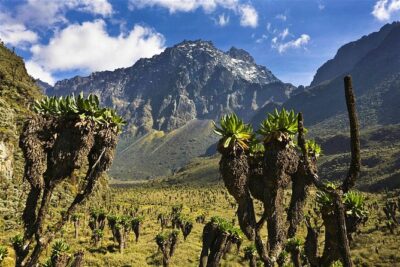 ★ 5.07 Days Rwenzori Summit (Margherita Peak) HikeFrom $1,43517 reviews
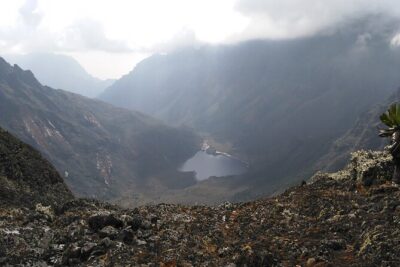 ★ 5.0Rwenzori Mountains Trekking with Margherita Peak SummitFrom $1,40013 reviews
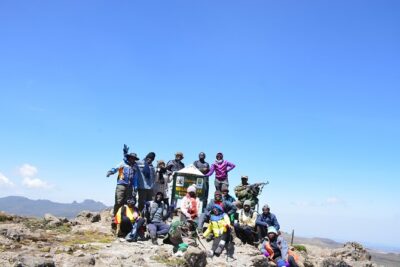 ★ 5.04 Days mount Elgon Trek, 4321m a.s.lFrom $55011 reviews
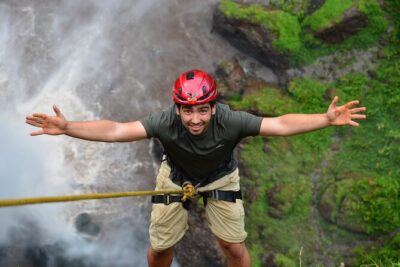 ★ 5.02 Days Abseiling and Rock ClimbingFrom $1008 reviews
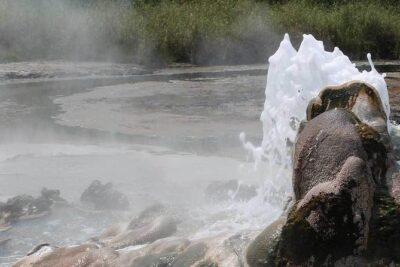 ★ 5.0Hot Springs Exploration and Hike CratersFrom $2566 reviews
Browse the lists this tour appears in