
REVIEW · ZIWA RHINO SANCTUARY
Ziwa Rhino Sanctuary
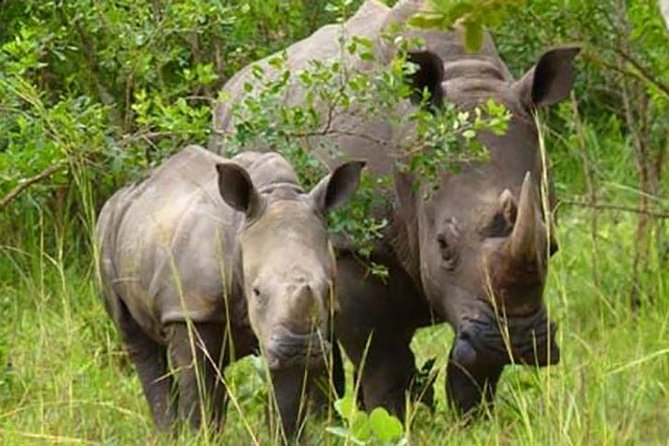
Walking among rhinos feels unreal. This full-day trip from Kampala gives you a rare shot at tracking white rhinos on foot, guided by a small-group guide, with the admission fees sorted so you do not waste time or money at the gate. I especially like that the day is paced around the best wildlife window, and that round-trip transport keeps logistics simple. The main drawback to weigh is the early start and the fact you are doing an on-foot wildlife walk, so comfortable shoes matter.
You leave at 6:00 am, then spend the day in the Nakasongola area with time for a forest walk for birds, a rhino tracking session, and a calmer lunch back at camp before heading home to Kampala. With a max of 15 people, it feels more personal than the typical cattle-truck safari day.
In This Review
- Key things to know before Ziwa Rhino Sanctuary
- Where Ziwa Rhino Sanctuary fits on a Uganda trip
- Getting to Ziwa Rhino Sanctuary: the 6:00 am Kampala start
- Rhino Fund Uganda: bird walk, safety moments, then the on-foot tracking
- What I like about this section
- A real-world consideration
- Lunch and craft shop stop: a calmer middle of the day
- How close is close? Managing expectations for the rhino encounter
- Conservation value: why you are not just visiting, you are supporting
- Price and value: what $580.15 really covers
- Comfort, group size, and the guide experience
- What to pack for a morning rhino walk
- Who should book this Ziwa rhino walk, and who should skip it
- Should you book this tour?
- FAQ
- What time does the tour start in Kampala?
- How long is the Ziwa Rhino Sanctuary experience?
- Is pickup offered from Kampala?
- Are admission fees included in the price?
- Is transport air-conditioned?
- How many people are in the group?
- Is international airfare included?
- What happens during the morning portion of the tour?
- Are boots provided for the trek?
- What if the weather is poor?
- Can I cancel for a full refund?
Key things to know before Ziwa Rhino Sanctuary
- 6:00 am start from Kampala keeps you on schedule for the morning rhino tracking window.
- Entrance fees are included, so the price is more predictable than many add-on-heavy tours.
- Small group size (up to 15) helps you get more attention during the walk.
- Rhino tracking is on foot, not a long-distance viewing session from a vehicle.
- Bird life shows up on the forest walk, including hornbills mentioned in the route.
- Boots are provided for the trek, which is a big relief if you arrive with only city shoes.
Where else to walk in on the Ziwa rhinos
- 3-Day Ultimate Big Five Safari – Murchison Falls & Rhinos
★ 5.0 · 55 reviews - Ziwa Rhino Sanctuary
★ 5.0 · 40 reviews - Day Tour Of Ziwa Rhino Sanctuary and Wildlife Ranch – ZIWA RHINO TREKKING
★ 4.5 · 10 reviews - Zziwa Rhino Sanctuary Walking Safari
★ 5.0 · 7 reviews
Where Ziwa Rhino Sanctuary fits on a Uganda trip
If your Uganda itinerary has you flying in, driving long distances, and trying to cram in big wildlife moments, Ziwa is a smart pressure-release valve. It is a full-day outing that centers on a single goal: seeing southern white rhinos in a protected setting and learning what the sanctuary is doing for conservation.
You also get something you often do not get on classic game drives. Here, the experience is built around proximity. The sanctuary walk setup is designed so you are not just scanning from afar. People describe it as getting close enough to feel like the animals are part of your personal space, and that is exactly why the day tends to be memorable.
At the same time, Ziwa is not trying to pretend it is a huge savanna ecosystem with hundreds of kilometers of roaming. It is a working conservation space. That makes it feel authentic in a different way, less about checking a box and more about seeing how protection and reintroduction can work.
Getting to Ziwa Rhino Sanctuary: the 6:00 am Kampala start
This tour leaves Kampala very early, at 6:00 am. That is not just a random time choice. You want cooler morning conditions and a better chance of a calmer pace during tracking. Also, starting early helps when Kampala traffic can stretch your day.
The drive heads toward the Nakasongola district area, and the route is described as roughly 2 to 3 hours on the road north. That means you should treat the day as a “real excursion,” not a quick hop across town.
One practical plus: you get round-trip transportation in an air-conditioned vehicle. Uganda road conditions can be bumpy, so the A/C is not luxury fluff. It helps you arrive less wiped out, which matters once you switch gears from road travel to walking.
Rhino Fund Uganda: bird walk, safety moments, then the on-foot tracking
When you arrive, the experience starts with a Rhino forest walk. This is where the day broadens out beyond rhinos. You can see different bird species, including hornbills, while you get moving on foot in a guided setting.
Then comes the part most people came for: tracking the rhinos on foot. The route is framed around finding wild rhinos in Uganda in the sanctuary environment. You are not meant to rush or wander. Your guide leads, and the whole thing is structured as a controlled wildlife encounter.
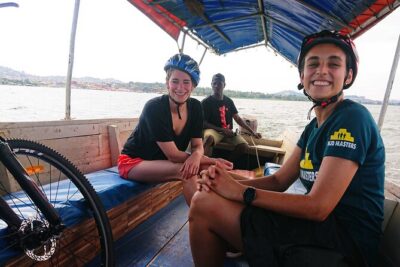

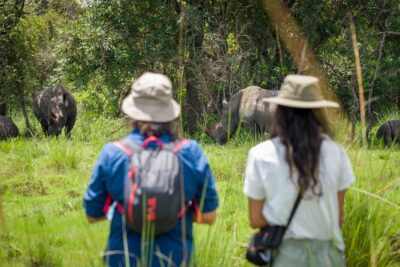
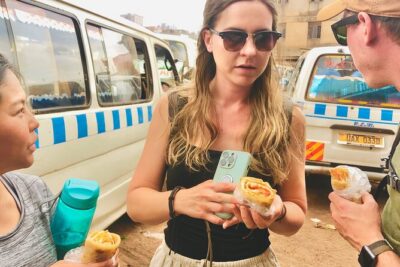

What I like about this section
I like that the sequence builds in steps. First you walk in the forest for birds. Then you shift into the rhino tracking moment after a safety briefing. One guide example from past tours is Joseph, who guests praised for fun facts and for knowing the rhinos by name. Even if your guide is someone else, the pattern is the same: you are there to learn how the sanctuary works, not just to take photos.
A real-world consideration
Because the tracking is on foot and you may need to follow instructions closely, this is not the kind of “anything goes” walk. If you have mobility issues, uneven footing sensitivity, or you get uncomfortable in active outdoor settings, it is worth thinking hard before booking. Most people can participate, but the day still has a physical side.
Lunch and craft shop stop: a calmer middle of the day
After tracking, the plan is to return to the camp area to relax and have lunch. The itinerary gives you that down time on purpose. It is not just empty sitting. You are transitioning from the intensity of close wildlife time back into normal human speed.
There is also time to visit a craft shop after lunch before you head back to Kampala. This is a small but useful break. You get a chance to stretch, browse, and pick up a few local items if that is your style.
The main thing to remember is timing. Because the day is designed as a full package, you should not expect long, unstructured hanging around. Think “practical break,” not “free afternoon.”
How close is close? Managing expectations for the rhino encounter
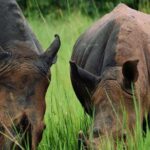
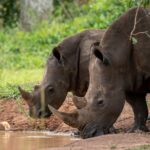
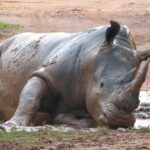
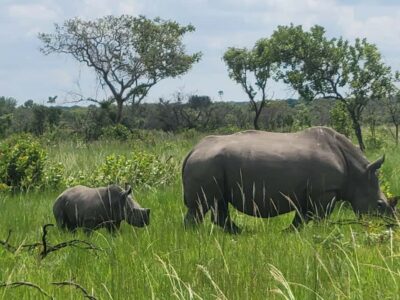
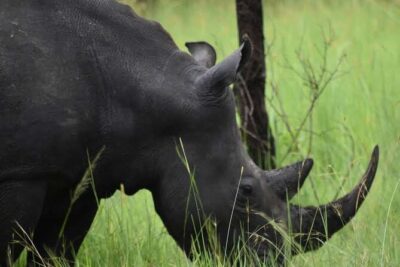
The big promise here is proximity to southern white rhinos. Based on how the sanctuary experience is described, you should expect a level of closeness that feels startling at first. People have said they were close enough to hear rhinos breathing and chewing while they grazed.
That does not mean you are in a theme-park situation. The point is controlled conservation. Your distance can vary depending on where the rhinos decide to be, how the group is positioned, and how the tracking is going that day.
So I recommend two mindsets:
1) Go in ready for it to feel intimate and real, not cinematic.
2) Be flexible. If the rhinos move, the walk follows their rhythm.
If you love wildlife photography, you will probably find you get the shot types you usually only dream about: not just “a rhino in the distance,” but a rhino as a living animal with behavior, sound, and texture.
Conservation value: why you are not just visiting, you are supporting
Ziwa is about more than entertainment. The sanctuary is framed as doing active conservation work for rhinos in Uganda, including helping grow a population over time.
Guests have shared details like the sanctuary starting from a small number of rhinos and then building upward to a much larger count. People have also mentioned scenes like an older rhino nursing a new baby. Those moments matter because they reflect breeding success and ongoing care, not just a one-time relocation.
You also learn the conservation story directly from your guide during the experience. It is the kind of learning that sticks because you are hearing it while you are literally in the environment where the work is happening.
If you care about animal welfare and want a wildlife day that is not just about consumption of sightings, this is where Ziwa earns its keep.
Price and value: what $580.15 really covers
At $580.15 per person, this is not a budget add-on. But it is also not a barebones “show up and pay more” situation.
Here is what you are getting that supports the value:
- Round-trip transportation from Kampala
- Air-conditioned vehicle
- Park entrance fees included
That entrance-fee inclusion is a big deal in places where tourists often get surprised by extra charges. Here, you pay once and move.
Also, you are paying for a specialized experience. Tracking rhinos on foot with guide time, safety setup, and conservation operations behind the scenes is labor-intensive. The small-group cap (maximum 15 people) also suggests you are not competing with a huge crowd for the same moment.
My practical take: if your priority is rhinos, and you want this specific kind of close encounter without wrangling logistics, this price can make sense. If you are more focused on classic game drives and bigger landscapes, you might find other safaris deliver more variety per hour.
Comfort, group size, and the guide experience
This is a maximum 15 travelers kind of tour. That matters because the rhino tracking moment is not something you can do at mass scale without changing the experience. With fewer people, your guide can keep a closer eye on the group and keep everyone positioned safely.
The vehicle is air-conditioned, and the itinerary is built as one continuous day circuit: Kampala to the sanctuary area, tracking and bird walk, then lunch and a craft stop, then return. That reduces decision fatigue and keeps your day on rails.
Guide quality shows up in the details. In past visits, people highlighted guides like Joseph for knowing rhinos by name and sharing lots of specific context. Even if you do not get Joseph, the pattern is that you are meant to leave with more than a sighting. You should come away understanding the sanctuary’s story and what makes the rhino tracking work possible.
What to pack for a morning rhino walk
The trek is on foot, and the experience includes a forest walk section. Past guests also mentioned that boots are provided for the trek. That helps a lot if you are traveling light.
Still, you should plan for comfort:
- Wear socks you are happy to get used on a real walk.
- Bring a light layer for the morning air, since you start early.
- Use sunscreen and protect your eyes. The day begins in the morning, but outdoor sun is still outdoor sun.
- Keep water in mind. The tour includes lunch time, but your best plan is to stay hydrated through the morning.
If you tend to get cold early, bring something small you can layer. If you get hot fast, stick to breathable clothing and expect to be active for part of the day.
Who should book this Ziwa rhino walk, and who should skip it
This tour is a strong fit if:
- You want a close encounter with rhinos, not just distant sightings
- You like guided conservation learning built into the wildlife day
- You prefer smaller groups and clearer structure
- You are doing Uganda northward parks and want a smart stop between bigger drives
It may not be the best fit if:
- You do not handle early starts well, because 6:00 am is non-negotiable
- You have concerns about a full on-foot wildlife walk
- You want a long, vehicle-based safari with lots of different animals in a single loop
Should you book this tour?
I think you should book Ziwa if your top priority is a truly different rhino experience, the kind where you hear and see animals up close and you understand why the sanctuary exists.
I would only hesitate if you are sensitive to walking, uneven ground, or being outside for a solid stretch of the morning. Otherwise, the combination of included admission, round-trip transport, and a small-group format makes it a pretty clean, low-drama way to add southern white rhinos to your Uganda plans.
FAQ
What time does the tour start in Kampala?
The start time is 6:00 am.
How long is the Ziwa Rhino Sanctuary experience?
It runs for about 8 hours (approx.).
Is pickup offered from Kampala?
Yes, pickup is offered, and the tour includes round-trip transportation.
Are admission fees included in the price?
Yes, park entrance fees are included.
Is transport air-conditioned?
Yes, the tour includes an air-conditioned vehicle.
How many people are in the group?
The tour has a maximum of 15 travelers.
Is international airfare included?
No, international flights are excluded.
What happens during the morning portion of the tour?
You start with a drive toward the sanctuary area, then enjoy a rhino forest walk where you can see birds, followed by rhino tracking on foot.
Are boots provided for the trek?
Yes, boots are provided for the trek.
What if the weather is poor?
The experience requires good weather. If it is canceled due to poor weather, you will be offered a different date or a full refund.
Can I cancel for a full refund?
You can cancel up to 24 hours in advance for a full refund. If you cancel less than 24 hours before the start time, the amount paid is not refunded.
The Rest of the Uganda File
Rhinos at Ziwa, More Options
Other Uganda trips we have written up
- 7-Day Uganda Adventure Safari – Midrange Lodges★ 5.0 · 3 reviews
- 5 days gorillas and chimpanzee tracking★ 4.5 · 3 reviews
- A Thrilling 1-Day Rhino Tracking Tour in Uganda★ 5.0 · 3 reviews
- 3 Days Murchison Falls Wildlife Safari★ 4.5 · 3 reviews
- 10 Day Gorilla Chimps and Big 5 Safari★ 5.0 · 3 reviews
Ziwa Rhino Sanctuary, compared.
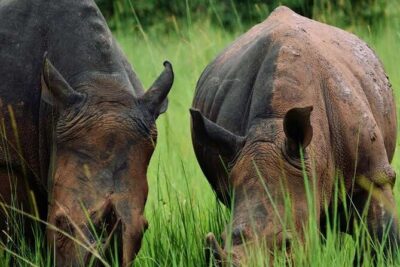 ★ 5.03-Day Ultimate Big Five Safari – Murchison Falls & RhinosFrom $99555 reviews
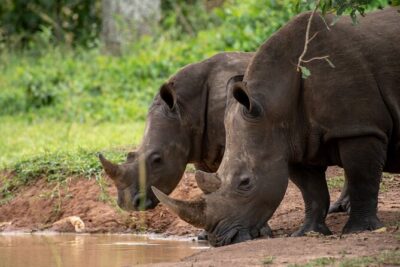 ★ 4.5Day Tour Of Ziwa Rhino Sanctuary and Wildlife Ranch – ZIWA RHINO TREKKINGFrom $30010 reviews
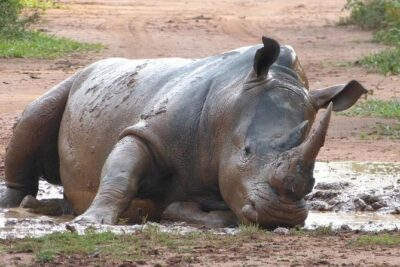 ★ 5.0Zziwa Rhino Sanctuary Walking SafariFrom $4007 reviews
 ★ 5.03-Days Safari to Murchison Falls National Park with Rhino Sanctuary hikeFrom $1,2826 reviews
 ★ 5.02 Day Guided Murchison Falls And Zziwa Rhino Trekking SafariFrom $1,2504 reviews
 ★ 5.03 Days Murchison Falls National Park Safari & Rhino trackingFrom $9904 reviews
 ★ 4.7From Kampala: Ziwa Rhino Sanctuary Day Tour with LunchFrom $2803 reviews
 ★ 5.0A Thrilling 1-Day Rhino Tracking Tour in UgandaFrom $3773 reviews
Browse the lists this tour appears in