
REVIEW · PEARL OF AFRICA SAFARIS
13-Day Wildlife Adventure Trip to the Pearl of Africa
This safari is part science, part spectacle. I especially like how chimp habituation in Kibale lets you watch a research team doing their daily work in the forest. It feels less like a drive-by wildlife show and more like learning how primates live, right in front of you.
I also love the Kazinga Channel launch, because that’s where you see animals use water like a highway. One word to keep in mind: pace. This route is packed, with early starts and long transfers, so if you hate getting up before the sun, plan accordingly.
One more thing that matters in Uganda safaris is the guide. In the feedback I’ve seen, guides such as David, Charles, and James are repeatedly praised for keeping things smooth and adapting when needed, which you’ll really feel on a 13-day wildlife run.
In This Review
- Key Highlights I’d Put on Your Shortlist
- Entering Uganda’s Wildlife Corridor: What This 13-Day Route Really Delivers
- Day 1 in Entebbe and Kampala: A Low-Stress Start Before the Real Safari Begins
- Murchison Falls National Park: Big Game, Rhinos at Zziwa, and a Boat That Changes the Day
- Morning Game Drives and Birding Clues: How to Read the Park Faster
- Kibale Forest National Park: Chimp Habituation as a Real-Day Research Window
- Queen Elizabeth National Park: Crater Drives, Lion Tracking, and the Kazinga Channel Payoff
- Ishasha Tree-Climbing Lions: When Luck Still Matters, But the Odds Are Reasonable
- Crossing Into Bwindi: The Final Long Build-Up to Gorilla Day
- Bwindi Gorilla Trekking: What Makes This Day Different
- Lake Mutanda and Lake Bunyonyi: A Well-Deserved Wind-Down With Boat Time
- Lake Mburo National Park: Zebras, Antelopes, and a Ranger-Led Walk
- Price and Value: Does $5,000 Per Person Make Sense Here?
- Who Should Book This Safari, and Who Might Want to Think Twice
- Should You Book This Trip?
- FAQ
- Where does the trip start, and what time does it begin?
- Is this tour private?
- What is included in the price besides the safari activities?
- What is not included?
- What wildlife experiences are included at Kibale and Bwindi?
- Do I get any water-based or boat activities?
- What is the cancellation policy?
Key Highlights I’d Put on Your Shortlist
- Chimp habituation in Kibale with the habituation team’s daily activities as your main event
- Murchison Falls boat trip to the base of the falls, plus an optional hike to the top
- Radio-collared lion tracking in Queen Elizabeth, with limited groups to reduce stress
- Tree-climbing lions in Ishasha, with a good chance you’ll spot them
- Gorilla bookings included on your Bwindi gorilla day, in a rainforest described as extremely ancient and biodiverse
- Guided Lake Mburo ranger walk with close-range wildlife viewing around zebras, giraffes, and eland
Longer Pearl of Africa runs we have covered
- 5-Day Pearl of Africa Chimps and Gorilla Trekking Safari
★ 5.0 · 52 reviews - 12-Day Pearl of Africa Wildlife and Adventure Highlights
★ 5.0 · 8 reviews - 13 Days Wildlife Adventure Trip To The Pearl Of Africa
★ 5.0 · 8 reviews - 12-Day Moderately Priced Pearl of Africa – Uganda Private Safari
★ 5.0 · 6 reviews
Entering Uganda’s Wildlife Corridor: What This 13-Day Route Really Delivers
This trip strings together some of Uganda’s most famous ecosystems in a way that makes sense for wildlife lovers. You don’t just chase sightings by car. You also spend time on the water, in forests, and in lake country, so the animals you see feel different from day to day.
Starting in Entebbe and ending back in Entebbe is also practical. You’ll begin with an airport welcome and a transfer to Kampala, and then you’ll work your way into the national parks and back out again. If your flight lands early, you even get the option of a late afternoon ride around Kampala before settling in.
The route’s biggest strength is variety. You get classic savannah game driving at Murchison Falls and Queen Elizabeth. Then you step into primate country at Kibale and Bwindi. Finally you slow down in lakeside settings in Lake Mutanda and Lake Mburo, where the pace feels calmer even when you’re still looking for wildlife.
Day 1 in Entebbe and Kampala: A Low-Stress Start Before the Real Safari Begins
Your first day is about getting oriented. After landing at Entebbe International Airport, you’ll meet a Home to Africa assigned driver/guide who will welcome you and drive you to your accommodation in Kampala.
If you arrive early, you can choose a late afternoon ride around Kampala. If you arrive later, you’ll check in, rest, and head to dinner with the simple goal of being ready for the park days ahead. This matters because the rest of the itinerary is built around early departures, especially when you’re doing game drives and primate tracking.
Murchison Falls National Park: Big Game, Rhinos at Zziwa, and a Boat That Changes the Day
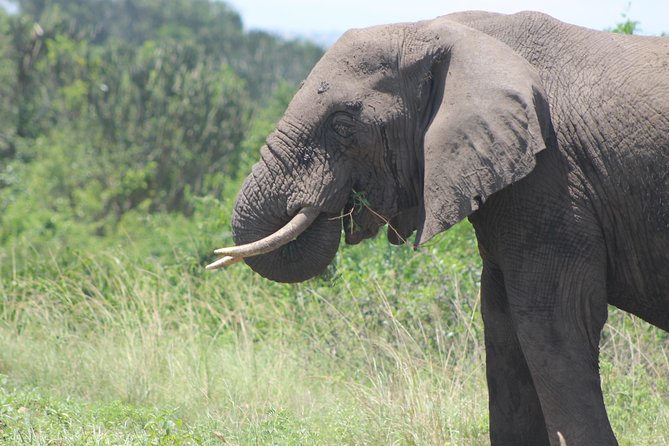
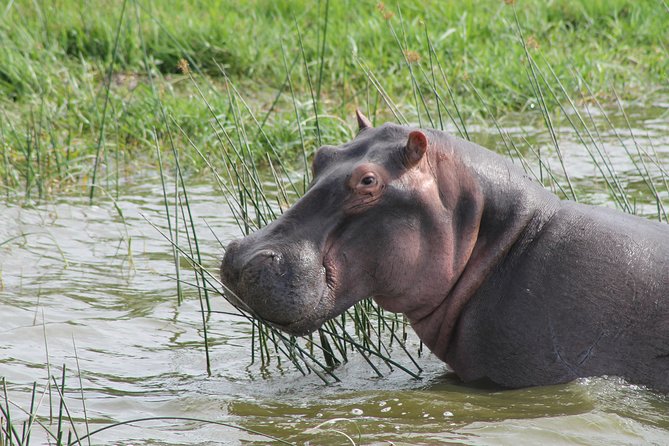
Murchison Falls National Park is where the safari flavor turns bold. You’ll drive to the park and spend time in the rolling plains with a chance to see lions, giraffes, hartebeest, buffalo, and elephants. The park is also described as holding concentrations of hippos and Nile crocodiles, which is a big deal because it shapes what you’ll look for on both land and water.
Before you fully settle into Murchison, you stop at Zziwa Rhino sanctuary. You’ll have at least one hour of rhino tracking there. That time box is important. Rhino tracking is not a quick photo stop. It’s a focused activity, and having at least an hour gives you real chances to spot and observe these animals properly.
Then comes the water day. On the second Murchison day, you’ll do an early morning game drive, and then after lunch you’ll head out for the boat trip to the base of Murchison Falls. This is where the scenery and the animals link up. Hippos and crocodiles show up, and you’ll also have water birds around the area.
If you like a challenge, you can also hike to the top of the falls. The itinerary flags that this hike may be strenuous. So treat this as an honest fitness check. If you know you can handle steep uphill effort for a trek, it can be one of your most memorable moments. If you prefer to conserve energy for gorillas later, it may be smarter to skip the climb and enjoy the views from the base area.
More Uganda wildlife trips, compared
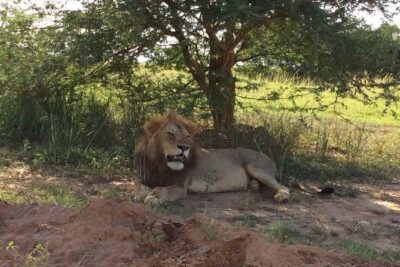
Morning Game Drives and Birding Clues: How to Read the Park Faster
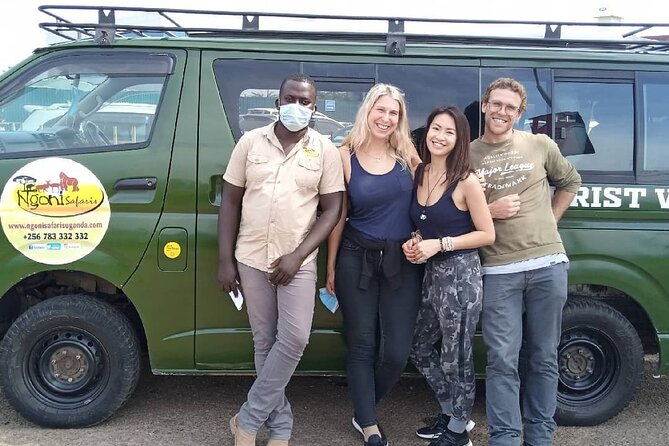
The itinerary keeps starting with early mornings in the bigger parks, and that’s not random. Morning light often makes spotting easier, and the animals tend to be more active.
In Murchison, there’s a birding angle too. For example, the area supports the secretary bird and black-chested snake eagle. You don’t need to be a hardcore birder to enjoy this. It just helps you shift from only looking for mammals to also scanning treetops, edges, and open ground for motion.
Kibale Forest National Park: Chimp Habituation as a Real-Day Research Window
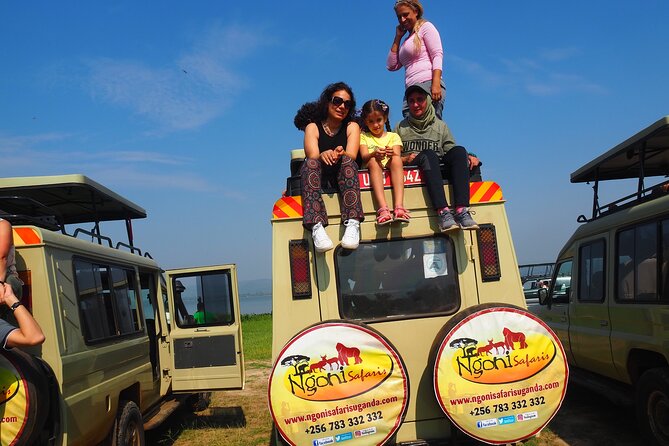
Kibale Forest National Park is where the safari becomes personal. Primates dominate the experience here, and the forest itself is described as a place where you can see species like colobus monkeys, grey-cheeked mangabeys, and red-tailed monkeys.
Your Kibale days include two different kinds of time.
On the first Kibale day, you arrive, check in, and keep things relaxed so you can settle after travel. That’s a smart move because the next day is your main primate event.
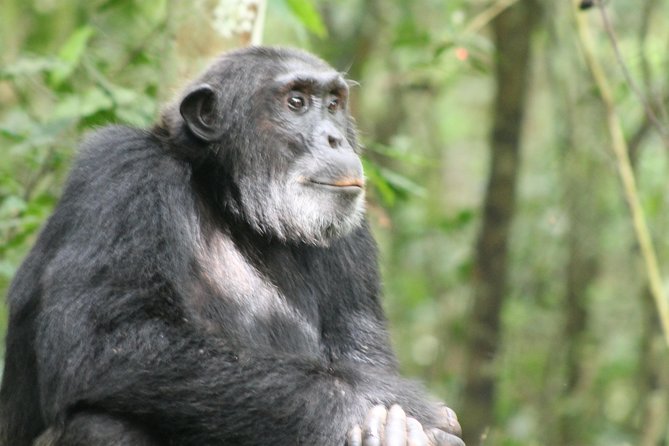
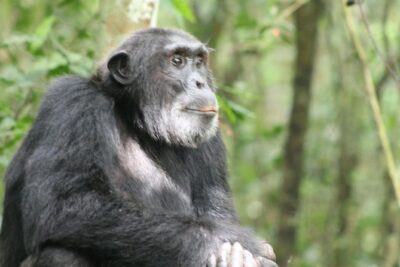
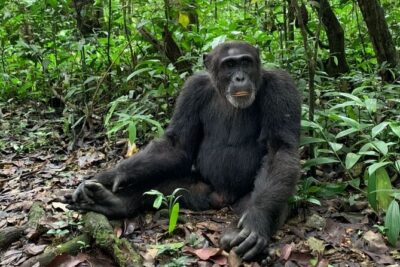
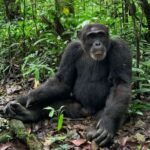
On day five, you get chimp habituation, described as a lifetime experience. The structure is key: you accompany Kibale’s research and habituation team on their daily activities. You spend much of the day with experts on the ground, and you witness behaviors such as nesting, de-nesting, feeding, and playing.
What this means for you in practical terms is that you’re not only watching chimps. You’re watching how people study them, how habituation works, and what researchers look for. It turns chimp time into a learning day, not just a photo day. If you care about animal behavior, this is the part of the trip that can change how you think about wildlife viewing.
Queen Elizabeth National Park: Crater Drives, Lion Tracking, and the Kazinga Channel Payoff
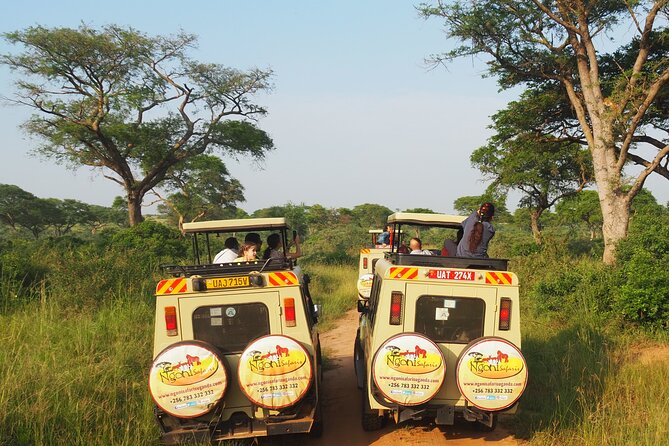
After Kibale, you move into Queen Elizabeth National Park, and the itinerary gives you two types of wildlife time: game drives and specialized experiences.
One option during your arrival phase is the explosion crater drive, where the day becomes more scenic while still giving you wildlife sightings. Another option is a standard game drive. The itinerary specifically notes that Cape buffaloes and elephants are commonly seen along the crater drive. If you’re deciding between the two, pick based on your mood. A crater drive is a viewpoint-heavy choice. A game drive is a quicker search-and-spot approach.
Then you get a rare one: lion tracking. The lions used for tracking have radio collars, and the experience is described as breathtaking for wildlife enthusiasts. The itinerary also states that groups going for tracking are limited to reduce stress on the collared lions and improve the quality of the experience. That is the right kind of detail to care about, because it’s a reminder that this isn’t just thrill-seeking. It’s designed to be controlled.
When you’re not tracking lions, you’re doing game viewing and then heading into the signature water experience.
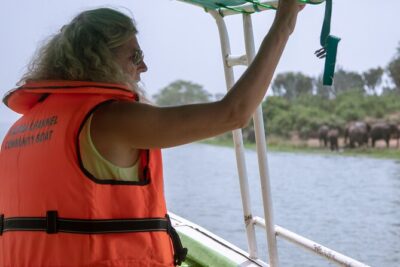
That signature is the launch (boat) trip on the Kazinga Channel. The channel joins Lake Edward and Lake George, and it functions like a meeting point for animals. This is where you look for animals along water edges during the ride and enjoy water birds at the same time. For many wildlife trips, the safari day can blur into another day of looking from the same vehicle. The Kazinga Channel breaks that pattern by moving you onto water, putting wildlife at a different scale, and turning the day into a mix of motion and observation.
Ishasha Tree-Climbing Lions: When Luck Still Matters, But the Odds Are Reasonable
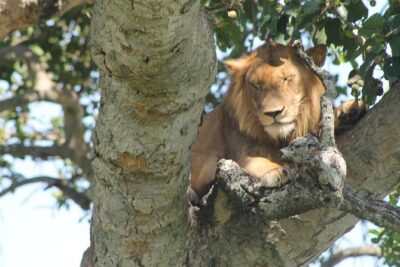
From Queen Elizabeth, you go to the Ishasha area for a targeted game viewing experience. Ishasha is famous for tree-climbing lions. The itinerary gives a specific estimate: the chance of spotting them is about 70 percent, though visibility can vary and lions may be down in the grassland looking for prey.
That 70 percent number is useful, but the more important takeaway is the reality check. You can do everything right and still not see a tree-climber that day. If you’re the type of traveler who needs certainty, this part may feel frustrating. If you’re the type who likes wildlife as a living, moving system, it can feel like the best kind of suspense.
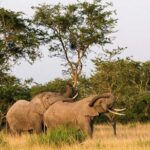
Besides lions, you also have the chance of seeing Uganda kob, Cape buffalos, elephants, and warthogs. So even if tree-climbing lions do not show up, the day usually does not feel wasted.
Crossing Into Bwindi: The Final Long Build-Up to Gorilla Day
The transition into Bwindi Impenetrable National Park comes right after your Ishasha experience. You’ll be up for breakfast and then transfer to Bwindi, with check-in and rest on arrival because you’ve got a strenuous day ahead.
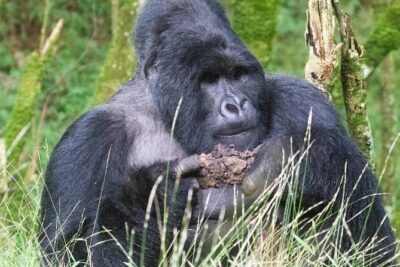
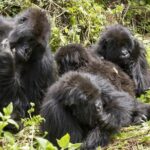
Bwindi is described as a biologically diverse rainforest that has persisted for over 25,000 years and even survived the last Ice Age. You’ll also learn that Bwindi is special because it holds mountain gorillas and chimpanzees, and it’s said that about half of the world’s mountain gorillas live here across nine habituated groups.
That matters because it changes how you think about what you’re doing. Gorilla trekking isn’t just a checklist item. It’s a regulated way of visiting habituated groups in a rare habitat. The itinerary’s focus on habituated groups means your expectations should be shaped by conservation and structured access, not by the fantasy of wandering into jungle freely.
Bwindi Gorilla Trekking: What Makes This Day Different
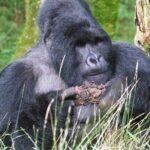
Your gorilla day is marked as Gorilla Bookings included. The day 10 description emphasizes Bwindi’s rainforest age, biodiversity, and the presence of mountain gorillas in habituated family groups. It also repeats the idea that Bwindi holds roughly half of the world’s gorillas.
This is your core “gentle giants” day, and the way the itinerary is set up suggests you will be going into it with an earlier rest period. That’s a good sign. Gorilla trekking requires real effort, and the forest can make time feel elastic, depending on where the gorillas are.
The big practical implication for you is timing and patience. You’ll want to be mentally ready for a day that is not strictly scheduled minute by minute in the way city tours are. It’s nature time, guided by the research and habituation systems already in place.
Lake Mutanda and Lake Bunyonyi: A Well-Deserved Wind-Down With Boat Time
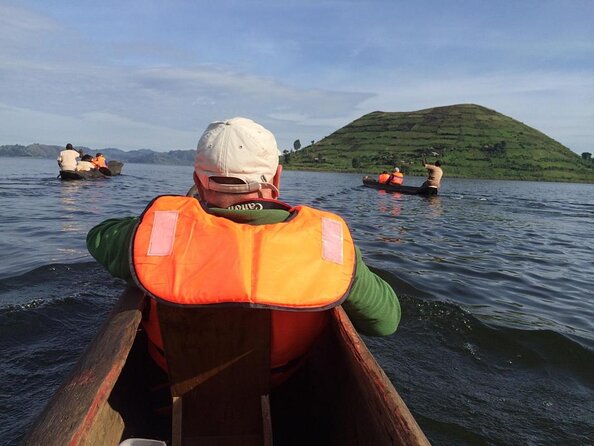
After the intensity of Bwindi, the itinerary shifts toward relaxation. You head to Lake Mutanda for a boat ride.
One detail to note: the description of Lake Mutanda also references Lake Bunyonyi, including its framed views by terraced hills, its elevation range of 2,200 to 2,478 meters, and 29 islands of different shapes and sizes. You’ll also get the chance to admire the islands from the water on the boat ride.
In the afternoon, there are optional activities listed, such as a canoe boat ride, a swim in the bilharzia-free lake, and exploring a nearby village. Those options are the kind of choices that help your brain reset after gorilla trekking.
This is also where you can trade the constant scan for animals for a slower form of attention: water, villages, and how people live with the lake.
Lake Mburo National Park: Zebras, Antelopes, and a Ranger-Led Walk
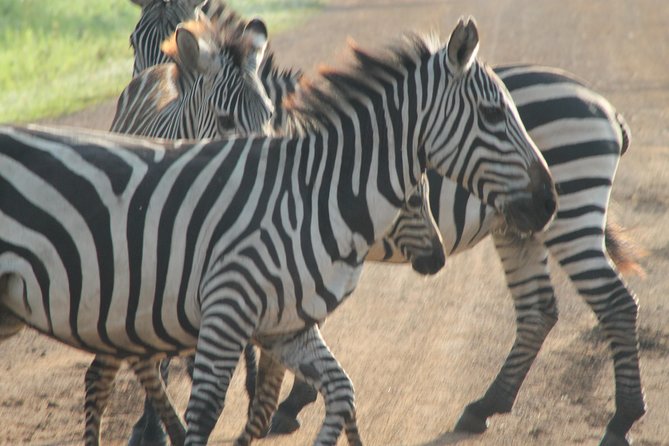
Lake Mburo National Park gives you another wildlife style: open viewing with frequent sightings of species that stay visible. The game drive later in the day sets expectations. You might see gigantic eland antelopes, zebras in big numbers, topis, impalas, warthogs, Uganda kob, and Cape buffalos.
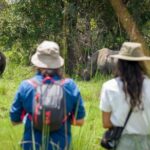
On day 13, you get the morning guided walk with an armed Uganda Wildlife Authority ranger/guide. The itinerary notes that during this early walk you often encounter hyenas returning to their dens after a night of being on the prowl. It also says you can encounter zebras, giraffes, eland, topi and other antelopes, and Cape buffaloes at close range.
The walk plus the follow-on time to take a trail to the top of the hills helps you end the trip with views over the area. The itinerary claims you’ll see Lake Mburo and beyond, including a view of nine of the twelve lakes surrounding Lake Mburo National Park. That hilltop moment is a satisfying final chapter after days in forests and along rivers and channels.
Price and Value: Does $5,000 Per Person Make Sense Here?
At $5,000 per person for a 13-day private wildlife route, you’re paying for two big things.
First, you’re paying for time in multiple high-demand ecosystems, not just one park. This includes Murchison Falls, Kibale, Queen Elizabeth, Bwindi, and Lake Mburo, plus water time at the Kazinga Channel and boat time around Lake Mutanda/Bunyonyi.
Second, you’re paying for the structured access that comes with primates and regulated wildlife experiences. In this itinerary, gorilla bookings are marked included on the gorilla day, and chimp habituation is a special research-guided format. Lion tracking with radio-collared lions is also described as a limited group activity.
What you’re not paying for here is international flights. The tour includes roundtrip airport transfer from Entebbe and all accommodation, plus meals for 12 days (breakfast, lunch, and dinner are listed in the inclusions). That matters because it reduces the number of variables you have to solve on the road.
A private tour also tends to cost more than joining a group, but the value is that your guide can keep your rhythm and your route flow consistent across long days.
Who Should Book This Safari, and Who Might Want to Think Twice
This trip is a great fit if you want a wildlife-focused itinerary that mixes land, water, and forest viewing. You’ll likely enjoy it most if you care about primates and big cats as much as you care about the classic savannah mammals.
It’s also ideal if you’re the kind of traveler who doesn’t mind early starts. The itinerary is built around mornings for game drives and primate-related activities.
You might think twice if you’re highly sensitive to fatigue. The itinerary includes strenuous hiking options at Murchison, strenuous gorilla trekking expectations at Bwindi, and multiple transfers. You can still do it, but you should go in with realistic energy levels.
Should You Book This Trip?
Yes, I’d recommend it if your top priorities are chimp habituation, gorillas, and high-quality wildlife time across multiple parks. The itinerary is designed so you’re not repeating the same game drive pattern for two weeks in a row. Instead, you get different ecosystems and different styles of wildlife viewing, including water-based viewing days and forest research time.
If you want a safari that feels active, purposeful, and varied, this one fits. And if you’re pairing that with a guide you trust, the smooth handling matters, especially on a long route where patience is part of the experience.
FAQ
Where does the trip start, and what time does it begin?
It starts at Entebbe Airport. The start time listed is 7:00 am.
Is this tour private?
Yes. It is listed as a private tour/activity, meaning only your group participates.
What is included in the price besides the safari activities?
The inclusions listed are all accommodation, roundtrip airport transfer, and meals for 12 days (breakfast, lunch, and dinner).
What is not included?
International flights are not included.
What wildlife experiences are included at Kibale and Bwindi?
Kibale includes chimp habituation with the habituation/research team’s daily activities. Bwindi includes gorilla bookings on the gorilla day.
Do I get any water-based or boat activities?
Yes. The route includes launch or boat experiences such as a boat trip to the base of Murchison Falls, a launch on the Kazinga Channel, and a boat ride on Lake Mutanda/Lake Bunyonyi.
What is the cancellation policy?
It offers free cancellation, with a full refund if you cancel at least 24 hours before the experience start time. If you cancel within 24 hours of the start time, the amount paid is not refunded.
Uganda Wildlife, Keep Going
The Rest of the Uganda File
The Pearl of Africa, End to End
Other Uganda trips we have written up
- 7-Day Uganda Adventure Safari – Midrange Lodges★ 5.0 · 3 reviews
- 5 days gorillas and chimpanzee tracking★ 4.5 · 3 reviews
- A Thrilling 1-Day Rhino Tracking Tour in Uganda★ 5.0 · 3 reviews
- 3 Days Murchison Falls Wildlife Safari★ 4.5 · 3 reviews
- 10 Day Gorilla Chimps and Big 5 Safari★ 5.0 · 3 reviews
Pearl of Africa Safaris, compared.
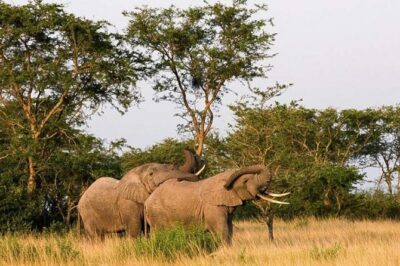 ★ 5.05-Day Pearl of Africa Chimps and Gorilla Trekking SafariFrom $2,17152 reviews
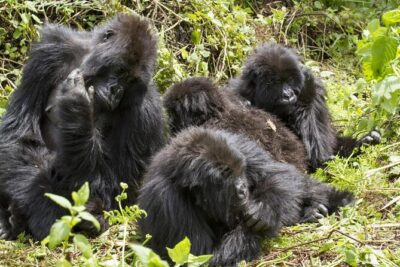 ★ 5.012-Day Pearl of Africa Wildlife and Adventure HighlightsFrom $4,8968 reviews
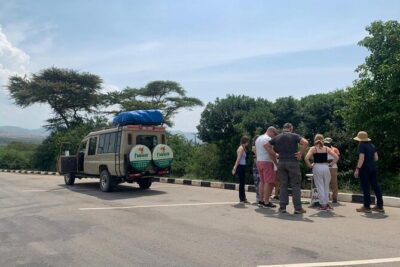 ★ 5.013 Days Wildlife Adventure Trip To The Pearl Of AfricaFrom $4,9998 reviews
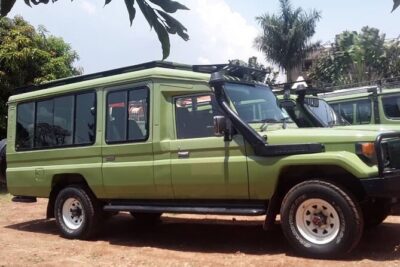 ★ 5.012-Day Moderately Priced Pearl of Africa – Uganda Private SafariFrom $2,9596 reviews
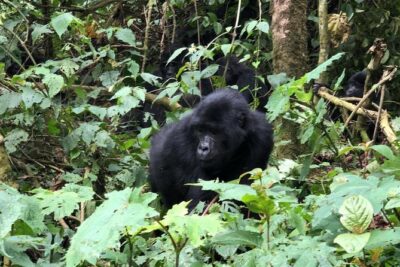 ★ 5.014 Day Pearl of Africa Uganda Classic Wildlife SafariFrom $4,9533 reviews
Browse the lists this tour appears in