
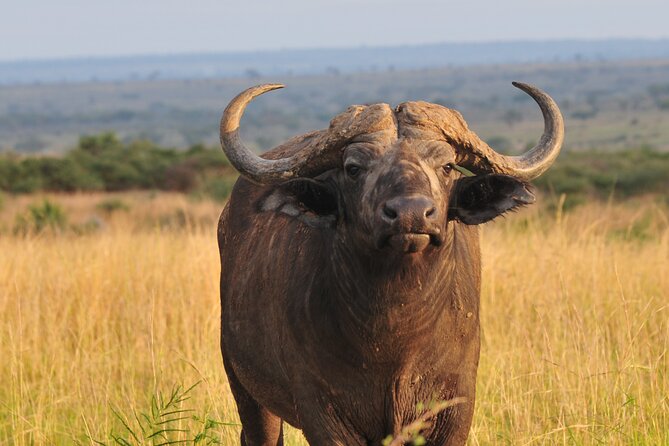
REVIEW · GORILLA TREKKING SAFARIS
12-Day Big 5, Chimp & Gorilla Trekking Safari
Gorillas and chimps in one trip sounds rare. This 12-day Uganda safari strings together chimpanzee tracking in Kibale and gorilla habituation in Bwindi, plus the big-wildlife rhythm of Uganda’s savannas and river time. The tradeoff is simple, some days start early and the forest treks can be physically demanding, so pack for mud, rain, and sore legs.
What I really like is the way the schedule balances primates with classic safari variety, not just one theme stretched too far. You also travel with a small group, up to 15 people, so you get a more personal feel with guides and time to ask questions. I also noticed a pattern in the best experiences, guides who explain animal behavior clearly, and I’ve seen the name Hamza tied to careful planning and strong animal talk.
In This Review
- Key highlights worth planning around
- Big 5 plus primates: why this Uganda combo works
- Day 1 in Kampala: markets, tombs, and mosque views
- Ziwa Rhino Sanctuary, then Murchison Falls: a Big Five warm-up
- Murchison Falls by morning game drive and 3-hour Nile cruise
- Kibale National Park: chimp tracking plus birds at Bigodi Wetland Sanctuary
- Queen Elizabeth National Park: Katwe salt lakes, Kasenyi plains, and Kazinga Channel boats
- Ishasha tree-climbing lions and the transfer into Bwindi
- Bwindi gorilla habituation: what to pack and how the trek runs
- Lake Bunyonyi and Lake Mburo: relaxing days that still feel like wildlife
- Jinja equator stop and bungee jumping option before heading back
- Mabamba Swamp for shoebill: a bird-focused finale on Lake Victoria
- Price and value: what $4,300 gets you in real terms
- Who should book this Uganda safari, and who should think twice
- Should you book the 12-day Big 5, Chimp and Gorilla trek?
- FAQ
- How many days is the safari?
- Where does the tour start?
- Is pickup included?
- What primate experiences are included?
- Which big parks are covered?
- Is this tour for a small group?
- Are service animals allowed?
- What is included in the Mabamba Swamp part?
- What is the cancellation policy?
Key highlights worth planning around
- Kibale chimp tracking with a formal park briefing before you hit the forest
- Bwindi gorilla hour on site, after trails that can range from 45 minutes to 6 hours
- Big 5-style pacing, starting with Ziwa Rhino Sanctuary and continuing through Murchison Falls and Queen Elizabeth
- Boat safaris that change the game, including a Nile cruise and the Kazinga Channel
- Mabamba Swamp shoebill search, a focused bird day on Lake Victoria
- A compact small group feel, with a maximum of 15 travelers overall
Other gorilla permits and trek operators we have been through
- 3 Days gorilla trekking Safari tour in Uganda
★ 5.0 · 121 reviews - 8-Day Murchison Falls, Chimp and Epic Gorilla Trekking Safari
★ 5.0 · 72 reviews - 5-Day Pearl of Africa Chimps and Gorilla Trekking Safari
★ 5.0 · 52 reviews - 3-Day Tour to Uganda – Gorilla Trekking Bwindi Forest
★ 5.0 · 51 reviews
Big 5 plus primates: why this Uganda combo works
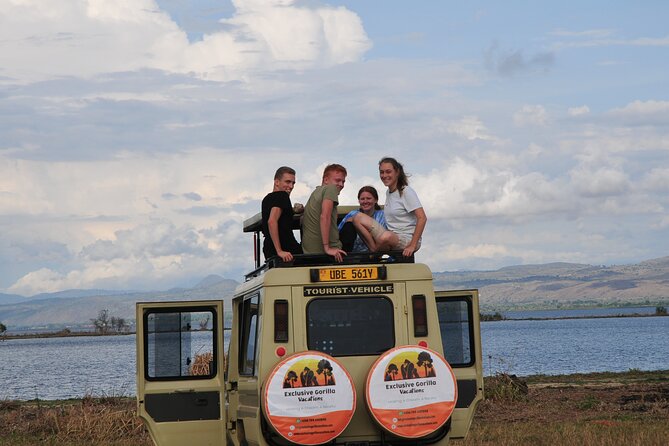
If you want Uganda for wildlife with a real primate hit, this route makes sense. You’re not choosing between gorillas, chimps, and classic safari days, you get all of them, with the logistics built around where the animals live.
The best part is that each park has a different “mode.” Murchison feels wide and river-driven. Queen Elizabeth mixes salt lakes, birds, and open plains. Kibale is all forest and primates. Bwindi is steep, quiet, and intensely focused. That mix is what keeps the trip from feeling like repeats.
Day 1 in Kampala: markets, tombs, and mosque views
Your safari starts with arrival support at Entebbe Airport, then a drive into Kampala for a city tour. Expect a mix of sites tied to Uganda’s cultural and political life, plus a look at everyday neighborhoods.
Kasubi Tombs are a strong first stop for context, since they’re a sacred burial site of Buganda kings. You’ll also visit places tied to the Buganda kingdom’s legacy, including Kabaka’s Palace and the Buganda Parliament. Then there’s a practical, very memorable photo moment at Gaddafi National Mosque, where climbing the minaret gives big city views.
If you have energy left, the markets in Owino and Nakasero are where you can feel Kampala’s daily pace. It’s a great way to shake off travel time, but wear shoes you don’t mind getting dusty.
Ziwa Rhino Sanctuary, then Murchison Falls: a Big Five warm-up
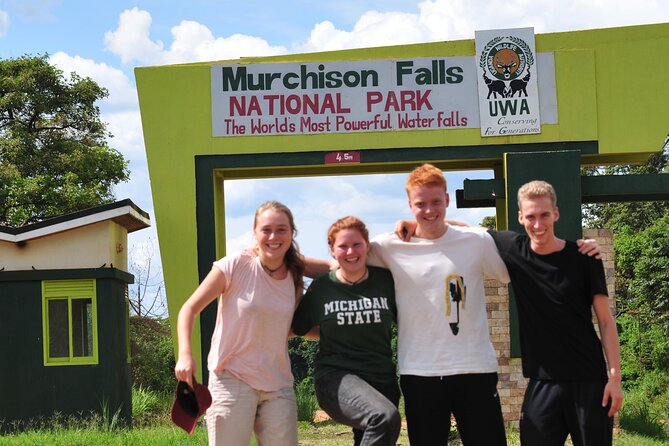
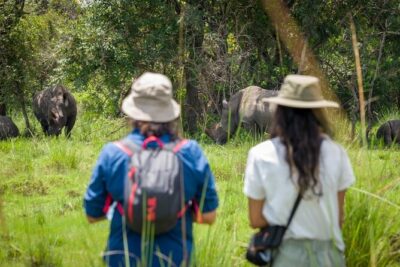
On day 2, you start with breakfast in Kampala and then head to Ziwa Rhino Sanctuary. I love this stop because it sets up the Big Five idea early, with the chance to track southern white rhinos.
Ziwa is described as the only place where these rhinos can be spotted in the wild in Uganda, linked to reintroduction efforts. For me, that matters because it turns “Big Five” from a slogan into something you can actually look for on the ground.
Then you move on to Murchison Falls National Park. This is where the trip shifts into classic safari tempo: longer drives, early starts, and animals spread across river country.
Chimp tracking elsewhere in Uganda, reviewed
Murchison Falls by morning game drive and 3-hour Nile cruise
Day 3 is built for early viewing. You’ll go out around 6 am with coffee and a snack, because the cooler hours are often when predators and active animals show themselves before they retreat.
In Murchison, the game drive plan includes the usual big-safari targets like lions, leopards, and hyenas, plus more common sights like giraffes, buffaloes, antelopes, and hippos. The guide’s job here is to help you read the landscape, spot movement, and connect behavior to species.
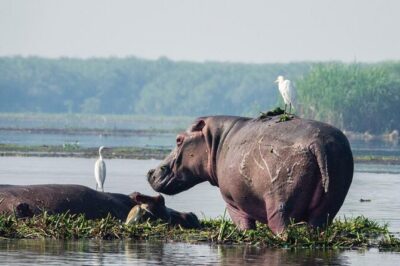
After a break and lunch back at the lodge, the afternoon shifts to water. You’ll take a 3-hour Nile River boat cruise, with chances to see crocodiles and hippos up close, and lots of aquatic birds. The banks can also deliver elephants and buffaloes when you’re lucky and the animals are in the mood to be seen.
Kibale National Park: chimp tracking plus birds at Bigodi Wetland Sanctuary
Kibale is your primate-focus day, so plan to trade comfort for real forest time. On day 4, you drive from Murchison toward Kibale and check in at a lodge in the Fort Portal area, after scenic stops that include Butiaba Escarpment, where you can look out toward Lake Albert and the Great East African Rift Valley’s eastern arm.
I like that this travel day doesn’t feel like dead time. You get tea-plantation scenery along the road, then you arrive with enough evening energy to rest up for chimpanzee tracking.
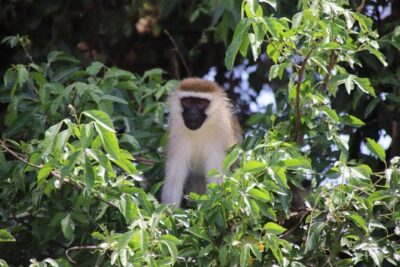
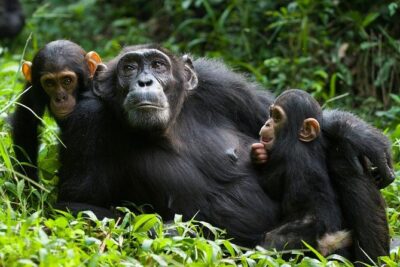
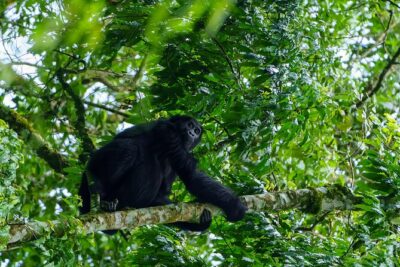
Day 5 starts with an official briefing at the park headquarters. Then you trek through the forest with an expert guide, searching for chimpanzees and other primates like black-and-white colobus monkeys, plus L’hoest’s monkeys and baboons. The tracking time is designed around close watching, with about an hour set aside for observing chimpanzee behavior, including feeding and social play.
It’s not only about chimps either. The forest supports birds and butterflies, and the plan calls out species like the African broadbill and Ross’ turaco. After lunch, you head to Bigodi Wetland Sanctuary for an evening tour, which includes a community walk and a chance to spot colobus and blue monkeys, plus strong birdlife.
If you like “small wins” in the forest, Kibale is where you get them.
Queen Elizabeth National Park: Katwe salt lakes, Kasenyi plains, and Kazinga Channel boats
Queen Elizabeth gives you a different kind of wildlife day. Day 6 combines Katwe Wildlife Sanctuary and bird-rich areas with an evening game drive.
At Katwe, you’ll visit the salt lake and learn how salt extraction works, including traditional methods and mention of past industrial techniques. It’s one of those stops that makes the park feel connected to local livelihoods, not just animals behind a fence.
Then you go to Lake Munyanyange, described as holding over 40 bird species, including flamingos, geese, gulls, and terns. That sets you up nicely for a sunset-style wildlife watch later.
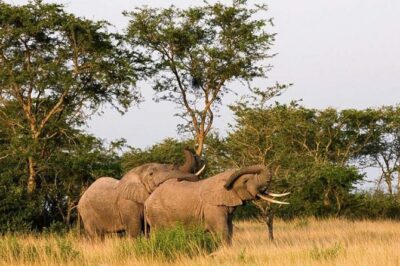
Evening game drive in the Kasenyi plains targets elephants, buffaloes, kobs, warthogs, and waterbucks, with chances to see the bigger predators too depending on conditions. It’s the kind of day where your guide’s reading of tracks, wind, and animal routines makes a difference.
Day 7 keeps the pace up. You do a morning game drive across Kasenyi plains and then switch to the Kazinga Channel for a boat safari. Here the focus is water-edge concentration, with hippos and Nile crocodiles plus birds lining the shore. When hundreds of birds are in view, it changes how you take photos, you start shooting quick, not just slow.
Ishasha tree-climbing lions and the transfer into Bwindi
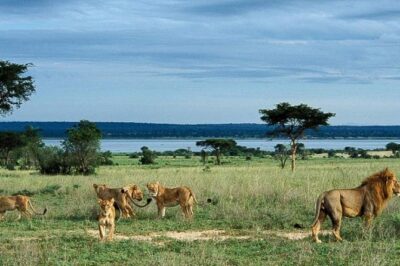
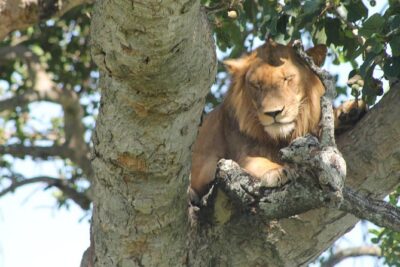
Ishasha is where Queen Elizabeth can surprise you. The plan includes a stop in Ishasha sector, with a special emphasis on the famous tree-climbing lions.
In practical terms, this means you’re watching fig trees and scanning for lions perched or lounging where most people expect to see them on the ground. Day 8 also keeps your day moving: you look for other wildlife like buffaloes, elephants, and topi antelopes, then you travel toward Bwindi.
This part is about timing. Arrive in Bwindi by evening, so you’re not arriving at gorilla trekking day exhausted. That’s a big deal, because Bwindi is the kind of place where you need your energy to be able to move with the group.
Bwindi gorilla habituation: what to pack and how the trek runs
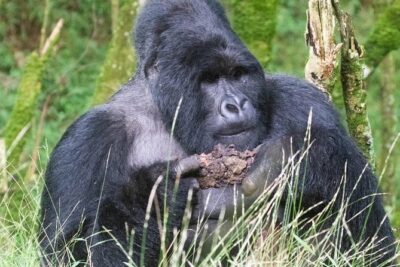
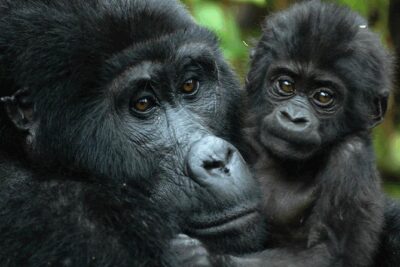
Bwindi is the main event. Day 9 is gorilla trekking with a pre-trek briefing on safety and etiquette. You’ll go with armed rangers and an experienced guide, and the group size on trek can be about eight trekkers at a time.
The trek itself can range from 45 minutes to 6 hours, depending on where the gorilla family is. I like that the schedule is honest about the time spread. You should be ready for anything from a shorter push to a long walk on uneven forest paths.
The plan is also specific about what to wear. You’ll want long trousers, a long-sleeved shirt, waterproof shoes, a jacket, a hat, and gloves. Rain in the forest can change traction fast, so these items are not overkill.
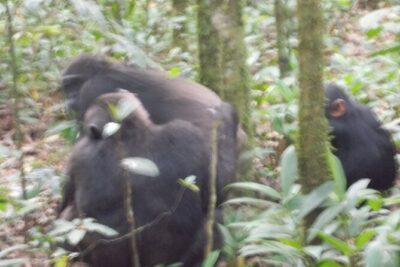
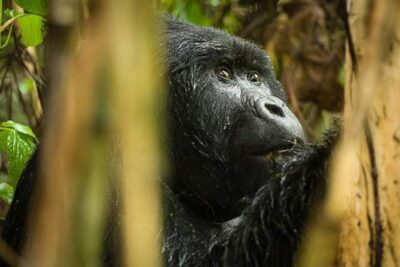
Once you find the gorillas, you get up to an hour watching their interactions. The plan describes the silverback’s watchful presence, and that’s exactly what makes this hour so intense. You’re close enough to see movement and behavior, but far enough to keep the wild respect rules in place.
Expect forest elephants and unique birds along the way, because your day is not only about the moment you first see the gorillas. You’re also learning how to read the forest.
Lake Bunyonyi and Lake Mburo: relaxing days that still feel like wildlife
After Bwindi, you get a breather with lake scenery. Day 10 is listed as Lake Mburo National Park, but the day’s core activity is a morning boat cruise on Lake Bunyonyi and its islands.
One standout is Akampene, also called Punishment Island. The story in the plan describes unmarried pregnant girls historically being taken there by the Kiga people for punishment, sometimes with tragic outcomes. I’d treat this as a reminder that “local history” can include painful chapters, so keep it respectful and don’t turn it into a fun anecdote.
The boat ride is on a private motorized canoe with a guide, which usually makes it easier to spot birds and talk through what you’re seeing. Lake time is also good for recovery after gorilla trekking.
Day 11 returns you to Lake Mburo National Park for a nature walk. The key difference here is that you’re walking and spotting wildlife while moving, not just driving past. The plan mentions a two-hour walk, so you’ll get a close feel for animal presence at eye level.
Then you transition toward Jinja, adding a major adrenaline option.
Jinja equator stop and bungee jumping option before heading back
Day 11 includes a stop at the equator, where there’s a water experiment connected to hemispheres and the Coriolis effect, plus time at the equator monument. It’s a fun break from animal watching, and it gives you something memorable that isn’t wilderness-based.
After that, the plan includes Jinja for bungee jumping. If you’re the type who likes a physical challenge after walking all week, this is a logical match. If you’re not, you might still enjoy Jinja’s vibe, but the plan specifically names bungee as the highlight there.
At the end of the day, you continue to Entebbe for your flight plans. It’s the right kind of wrap-up because you’re not sitting in Uganda for days with nothing scheduled.
Mabamba Swamp for shoebill: a bird-focused finale on Lake Victoria
Your last day is dedicated birding. Day 12 takes you to Mabamba Swamp for shoebill bird watching, described as a historical bird.
You’ll drive to Nakiwoggo Landing site and go by small boat onto Lake Victoria toward the swamp. The shoebill search is the main goal, but the plan also sets expectations for other birds, including weaver birds, herons, egrets, pelicans, cormorants, and jackanas.
The best part here is focus. After ten days of big animal variety and forest primates, it’s nice to end with a quieter, more patient kind of wildlife activity, where spotting the right shape matters.
After the boat time, you return to your lodge, have lunch, and prepare for your flight back home.
Price and value: what $4,300 gets you in real terms
At $4,300 per person for about 12 days, this is not a budget safari. But it’s also not trying to be one, it’s priced like a serious Uganda itinerary with high-demand experiences.
The value is in the combination. You get multiple national parks, two primate days (chimp tracking and gorilla habituation), and several guided wildlife blocks, including game drives and boat safaris. You’re also traveling with pickup support, and the group size has an upper limit of 15 people, which helps keep things from feeling too crowded.
One practical sign of how in-demand this is: it’s commonly booked about 96 days in advance on average. That tells you to plan early if your dates are fixed, especially if you want smoother timing around the gorilla and chimp days.
Who should book this Uganda safari, and who should think twice
This trip is a strong fit if you want a “one-country greatest hits” style itinerary and you’re excited to do both primate tracking and Big Five themed safari time. It’s also a good match for photographers, because you get land viewing plus boats plus forest watching, all within the same overall route.
Think twice if you struggle with early starts and long walking days. Bwindi in particular can mean up to 6 hours of trekking depending on the gorilla family location, and the plan asks you to wear specific gear for wet forest conditions.
Should you book the 12-day Big 5, Chimp and Gorilla trek?
I think you should book it if primates are non-negotiable for you and you also want real variety beyond one park. The structure makes sense, Kibale and Bwindi get the attention they need, while Murchison and Queen Elizabeth handle the broader safari feel with game drives and river cruises.
If you can handle a physically active week and you’re okay paying for a premium wildlife combo, this is a solid pick for Uganda. Just be ready for early mornings, forest weather, and the fact that the best moments come when you slow down and follow the guide’s cues.
FAQ
How many days is the safari?
It runs for 12 days, approximately.
Where does the tour start?
The tour starts at Entebbe Airport in Entebbe, Uganda.
Is pickup included?
Pickup is offered.
What primate experiences are included?
The program includes chimpanzee trekking in Kibale National Park and gorilla habituation or tracking in Bwindi Impenetrable National Park.
Which big parks are covered?
You’ll visit Murchison Falls National Park and Queen Elizabeth National Park, plus Kibale National Park and Bwindi Impenetrable National Park. The itinerary also includes Lake Mburo National Park and Mabamba Swamp birding.
Is this tour for a small group?
Yes. It has a maximum of 15 travelers.
Are service animals allowed?
Yes, service animals are allowed.
What is included in the Mabamba Swamp part?
It’s a shoebill bird watching excursion in Mabamba Swamp, with a boat ride from Nakiwoggo Landing site.
What is the cancellation policy?
Free cancellation is available up to 24 hours in advance for a full refund. If you cancel less than 24 hours before the start time, the amount paid is not refunded.
Big Game, Longer Circuits


Chimps Elsewhere in Uganda
Gorilla Treks, Three More Ways
Other Uganda trips we have written up
- 7-Day Uganda Adventure Safari – Midrange Lodges★ 5.0 · 3 reviews
- 5 days gorillas and chimpanzee tracking★ 4.5 · 3 reviews
- A Thrilling 1-Day Rhino Tracking Tour in Uganda★ 5.0 · 3 reviews
- 3 Days Murchison Falls Wildlife Safari★ 4.5 · 3 reviews
- 10 Day Gorilla Chimps and Big 5 Safari★ 5.0 · 3 reviews
Gorilla Trekking Safaris, compared.
 ★ 5.03 Days gorilla trekking Safari tour in UgandaFrom $2,600121 reviews
 ★ 5.08-Day Murchison Falls, Chimp and Epic Gorilla Trekking SafariFrom $3,59872 reviews
 ★ 5.05-Day Pearl of Africa Chimps and Gorilla Trekking SafariFrom $2,17152 reviews
 ★ 5.03-Day Tour to Uganda – Gorilla Trekking Bwindi ForestFrom $1,11051 reviews
 ★ 5.0Gorilla Tracking & Batwa Culture ExperienceFrom $2,84040 reviews
 ★ 5.04-Day Uganda Gorilla Trekking and Wildlife SafariFrom $2,45037 reviews
 ★ 5.0Private 3 Day Gorilla Trekking Safari in UgandaFrom $3,32636 reviews
 ★ 5.08-Day Murchison Falls, Chimp and Epic Gorilla TrekkingFrom $12,00032 reviews
Browse the lists this tour appears in